
What Is a Smart Parking Access Control System?
Release time:
2026-11-04
Quick answer: A smart parking access control system combines number plate recognition, RFID or ticket credentials, vehicle detection, a barrier controller and management software to decide who may enter, open the barrier automatically and record every movement. It is specified around lane count, peak flow, user groups, payment rules and privacy obligations — not by barrier speed alone.
In a conventional car park a driver takes a ticket, presses an intercom or waits for an attendant. A smart system automates those steps, applies consistent rules and gives the operator a usable record of what happened at the entrance. The functions that are actually available depend on the equipment, the software and the access policy chosen for the site.
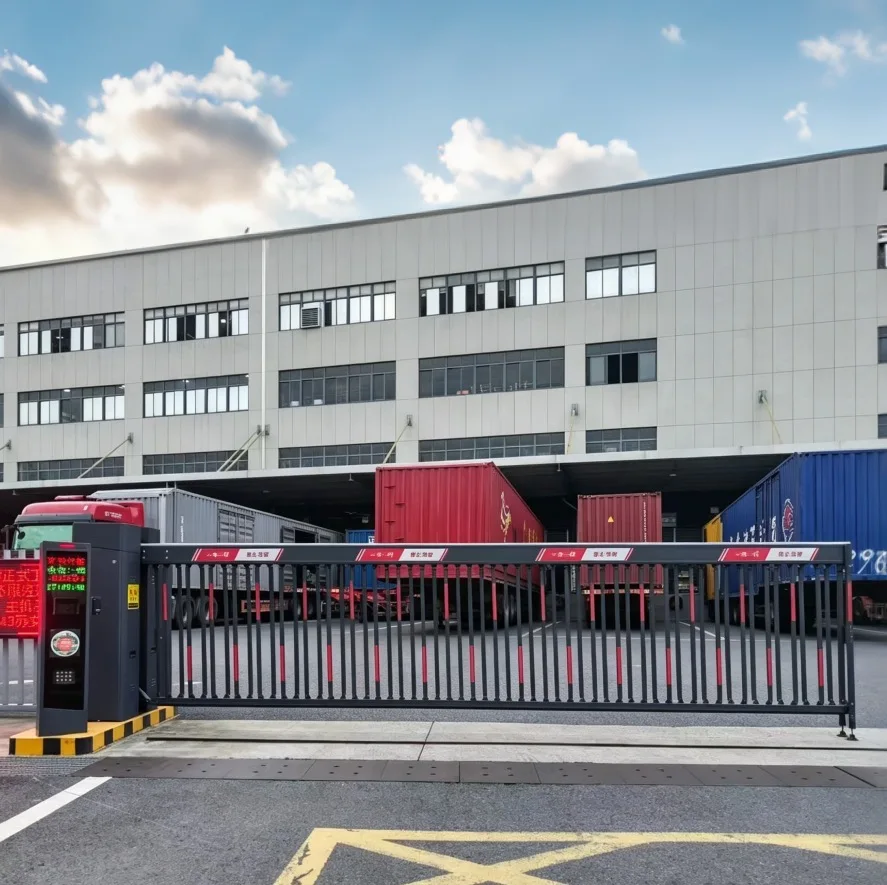
How a smart parking access control system works
Most installations follow the same sequence: detect the vehicle, identify it or receive an access request, validate permission, raise the arm, confirm safe passage and log the event. At exit the system repeats the check or confirms that payment is settled before releasing the vehicle.
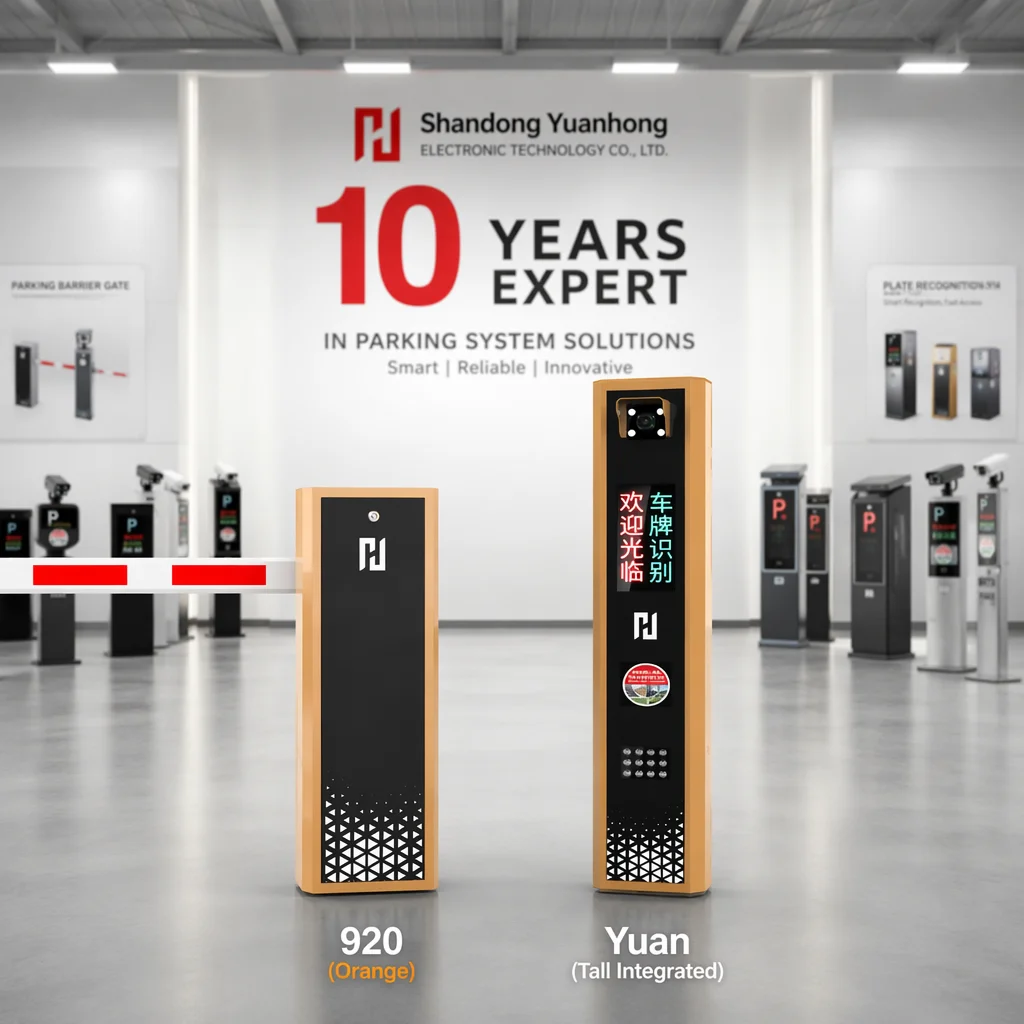
1. Vehicle detection
A detector tells the controller that a vehicle is approaching or occupying the lane. Depending on layout this may be an induction loop, a radar sensor or another compatible device. Position matters: a detector that is set too far forward or too far back causes missed detections, premature closing or vehicles being counted twice.
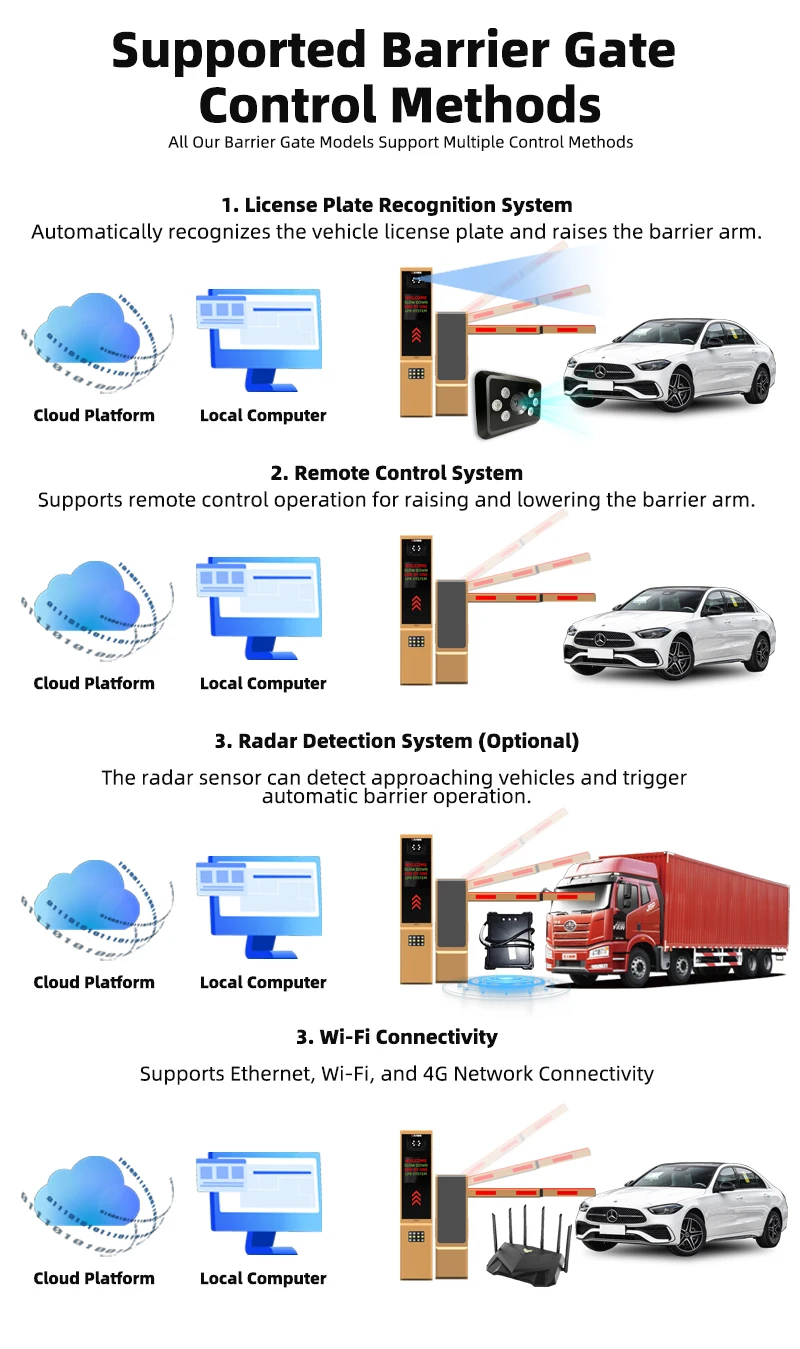
2. Identification and authorisation
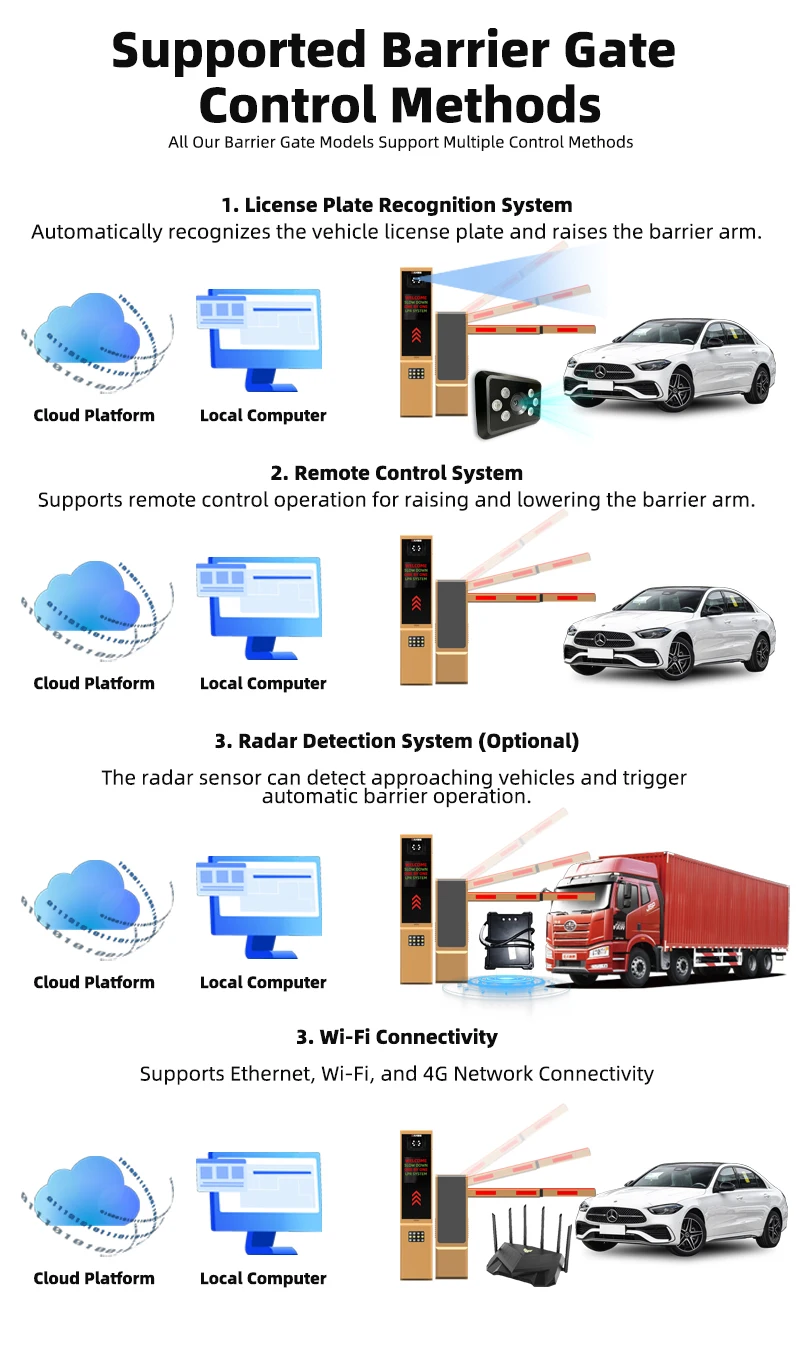
The system checks whether this vehicle or driver may use the car park. ANPR reads the plate and compares it with an authorised list or a configured rule. RFID identifies registered tags. QR codes, cards, intercoms and reception approval cover visitors, contractors and occasional users. Every method needs a defined exception path for unreadable plates, lost tags and unregistered arrivals.
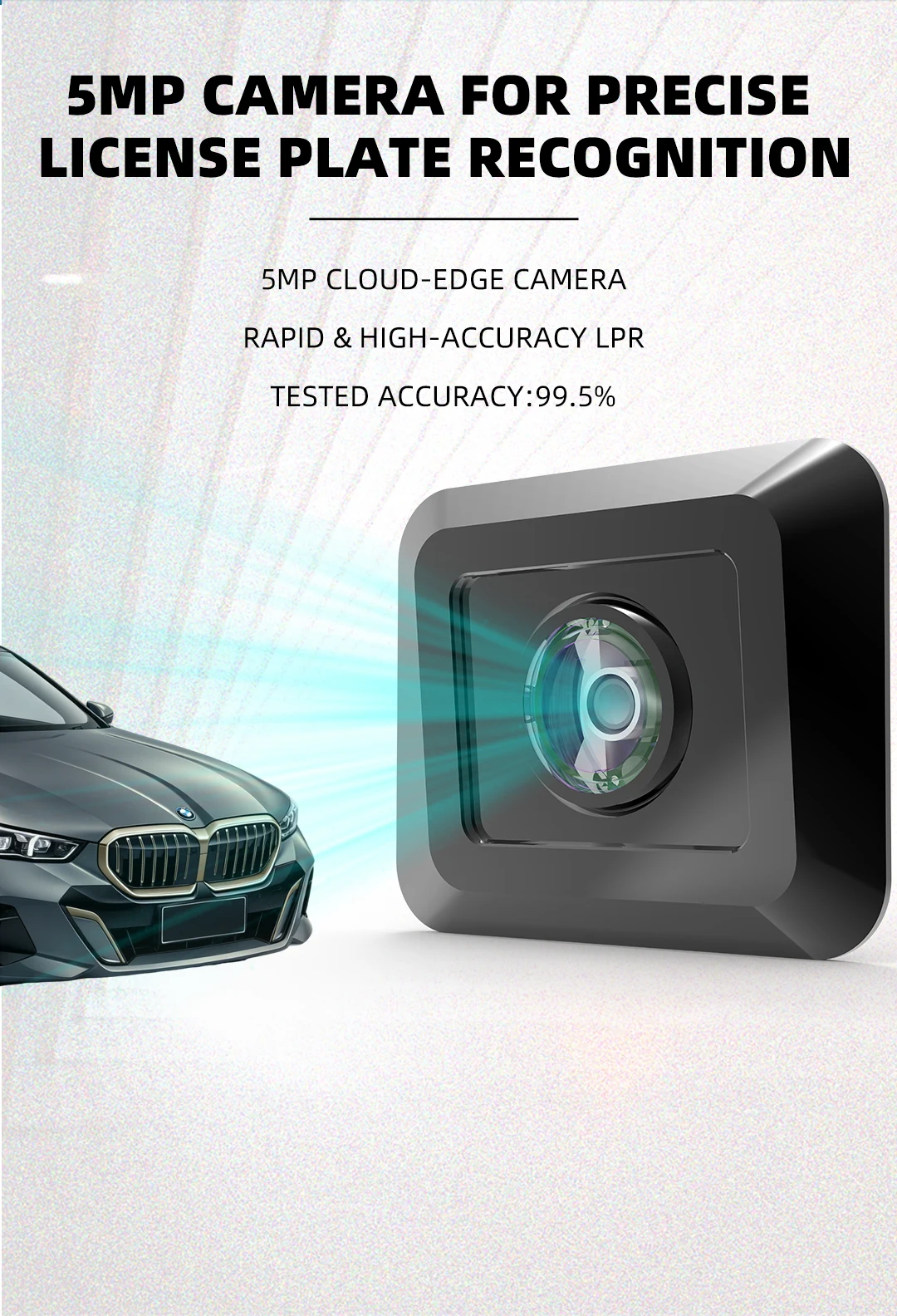
3. Barrier control
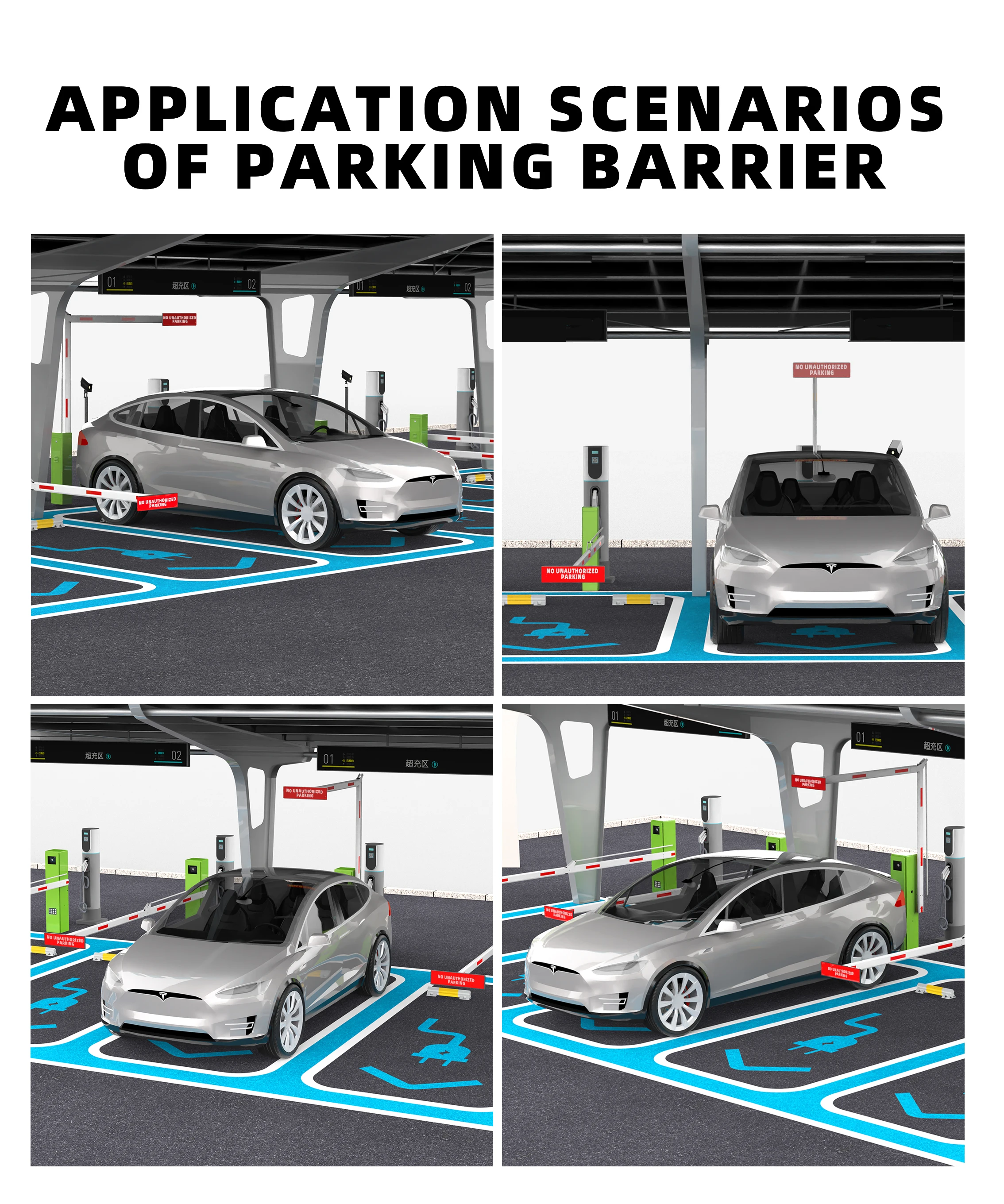
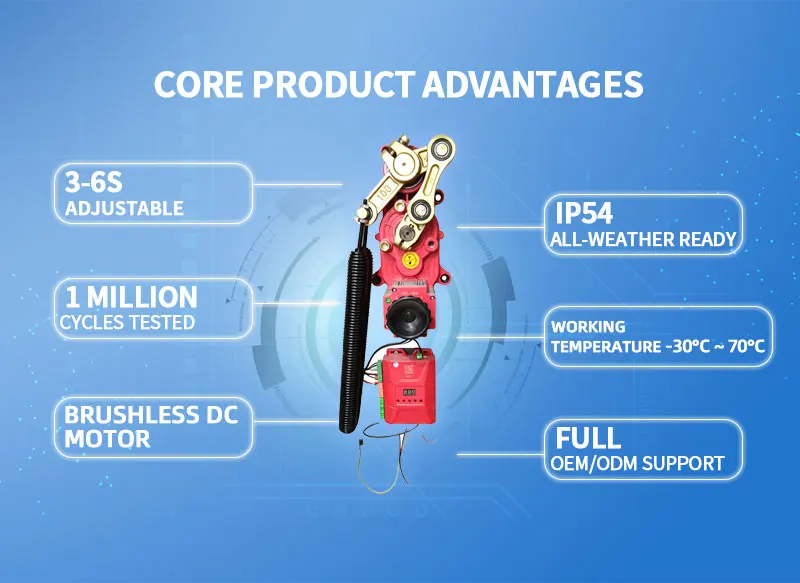
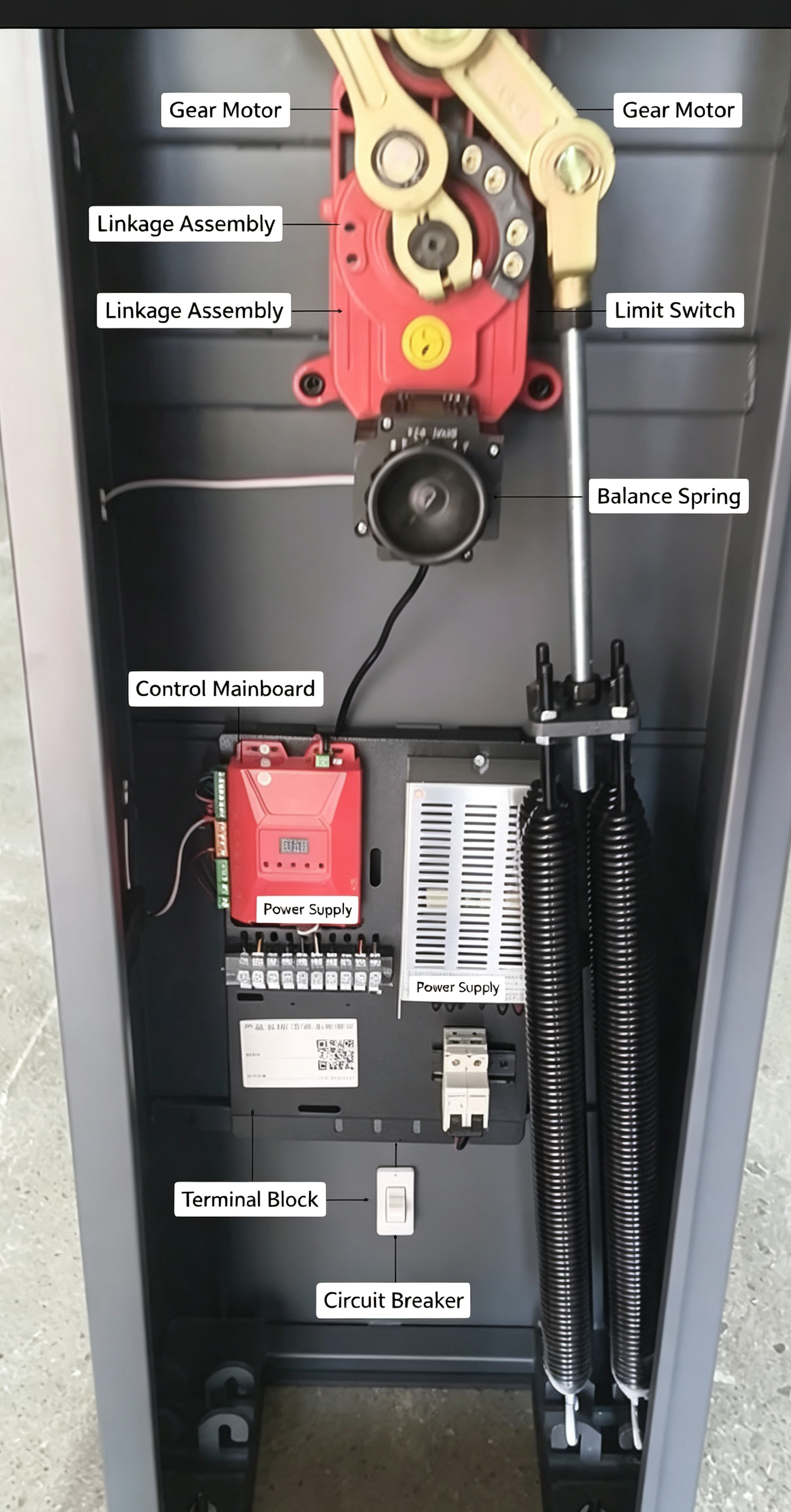
Once access is approved the controller sends an open command to the barrier. Selection should be based on lane width, arm length, peak flow, required opening time, duty cycle, wind exposure and the mix of vehicles — a car park entrance and a logistics yard rarely need the same model. Confirm the duty rating for the exact model rather than for the product family.
4. Safe passage and event logging
Safety inputs keep the arm from closing on a vehicle or a person. Depending on the design this may be a loop, radar, photocells or a combination. The controller should also record entries, refusals, alarms, manual overrides and operator actions; that log is what makes disputes and faults resolvable.
Main components and what each one does
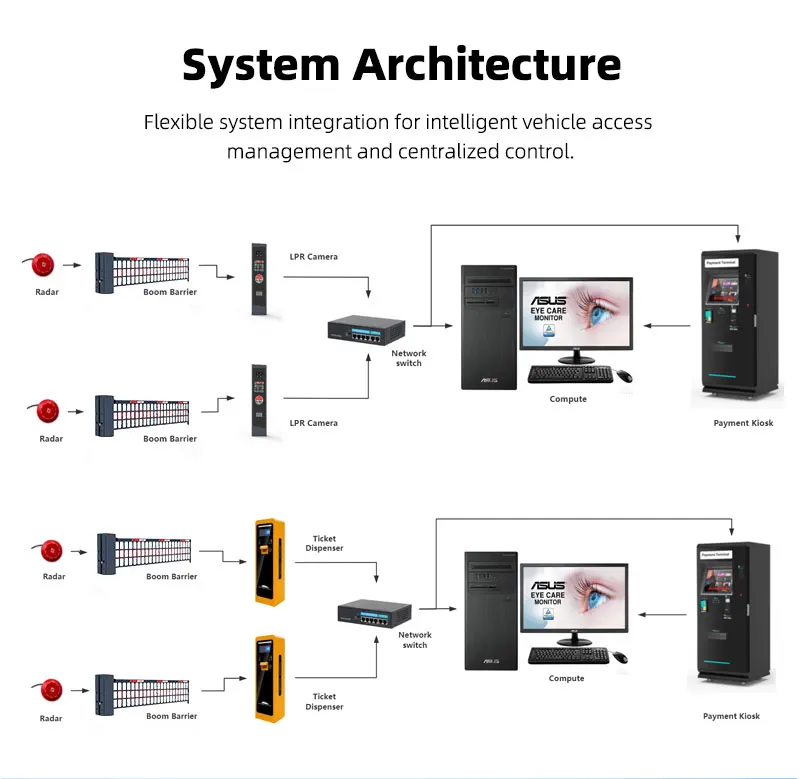
A smart car park is a coordinated installation. Each element has a defined role, and leaving one out changes what the system can promise.
| Component | Main function |
|---|---|
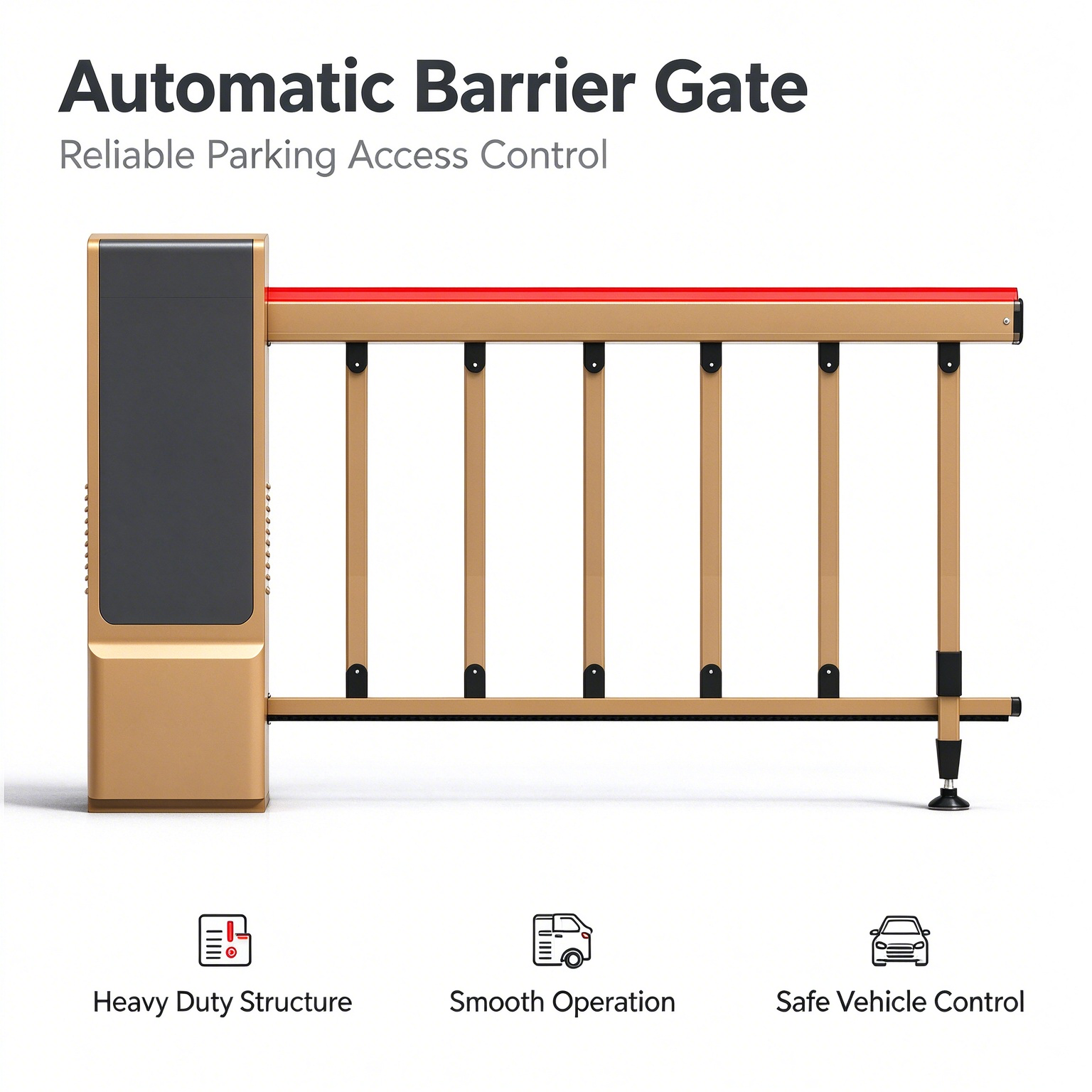
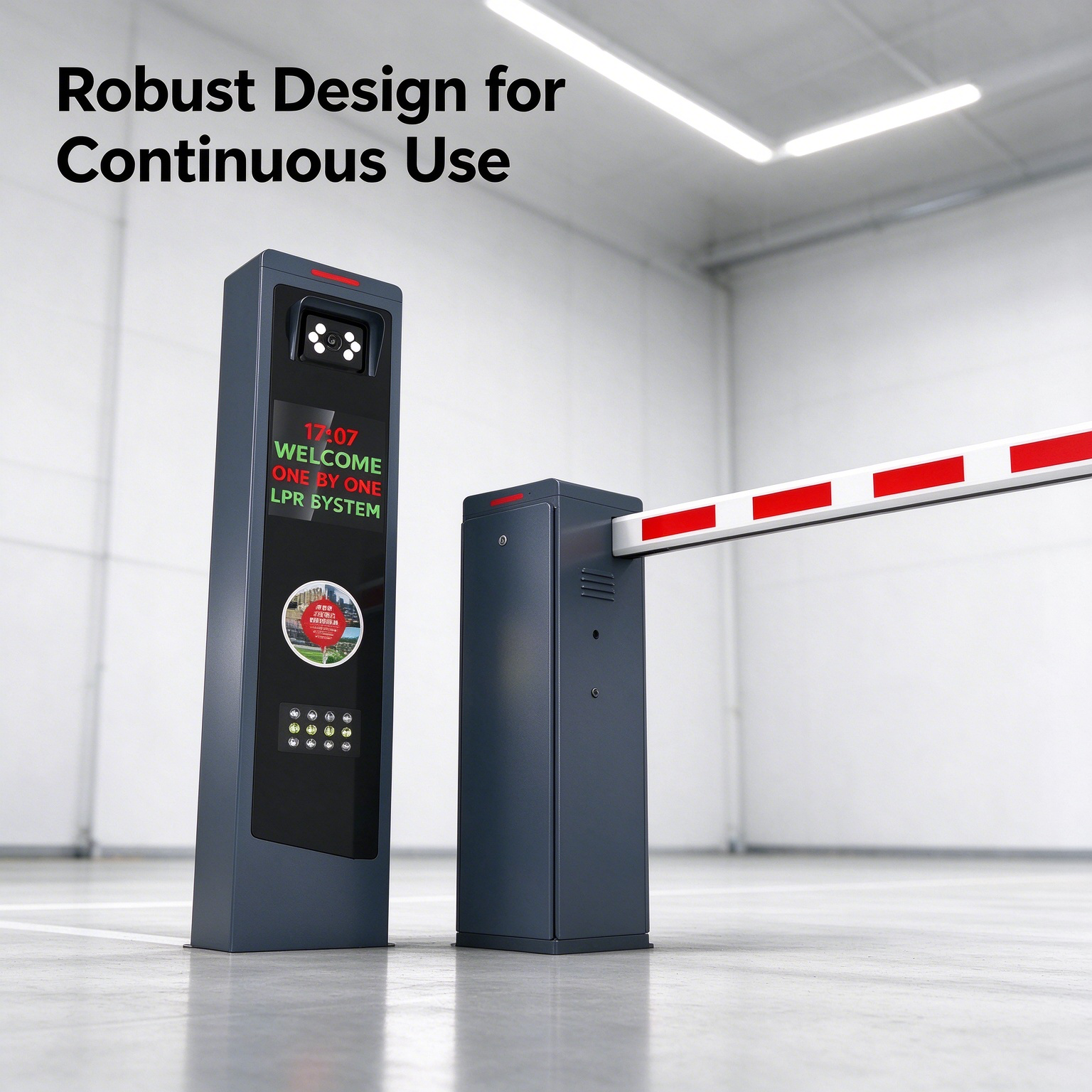
| Automatic boom barrier | Physically controls vehicle entry and exit. |
| ANPR / LPR camera | Reads registration plates for authorised access or parking management. |
| RFID reader and tags | Provides contactless identification for registered vehicles. |
| Vehicle detector or radar | Detects presence and supports safe barrier operation. |
| Controller and access software | Applies rules, connects devices and records events. |
| Payment terminal or platform | Supports paid parking where required. |
| Intercom or visitor workflow | Lets visitors request access and staff approve it. |
| Network and power equipment | Connects devices and supplies reliable power. |
Identification methods compared
ANPR / LPR number plate recognition
ANPR suits sites where authorised vehicles should enter without stopping. Performance depends on camera angle, lighting, plate condition, vehicle speed, weather and the quality of the integration. A workable exception process for unreadable plates matters more than a headline accuracy figure.
RFID access
RFID fits staff car parks, residential developments and fleet entrances where a tag or card can be issued. It is familiar and reliable, but it needs administration: lost tags, leavers, contractors and temporary permissions all require a process.
QR codes, tickets and payment
QR codes and ticketing serve visitors and short-stay parking, while payment integration links a paid session to an exit authorisation. Decide early whether payment happens at entry, at a pay station, online or before exit, and how failed or disputed payments are handled.
Intercom and staff-assisted access
An intercom remains the practical answer for deliveries, contractors, emergency services and visitors who are not in the database. Pair it with a written authorisation procedure so staff verify requests consistently and exceptions are recorded.
Benefits for car park operators
The value is not simply that the arm lifts by itself. A well-designed system reduces routine manual checks, makes access decisions consistent and produces an audit trail that can be used to investigate complaints, access disputes and equipment faults. ANPR and RFID shorten entry for authorised users; event records shorten the time needed to understand what went wrong.
Integration with existing access control or visitor management software can also remove duplicated administration, provided the interfaces are genuinely compatible and the integration is commissioned, not assumed.
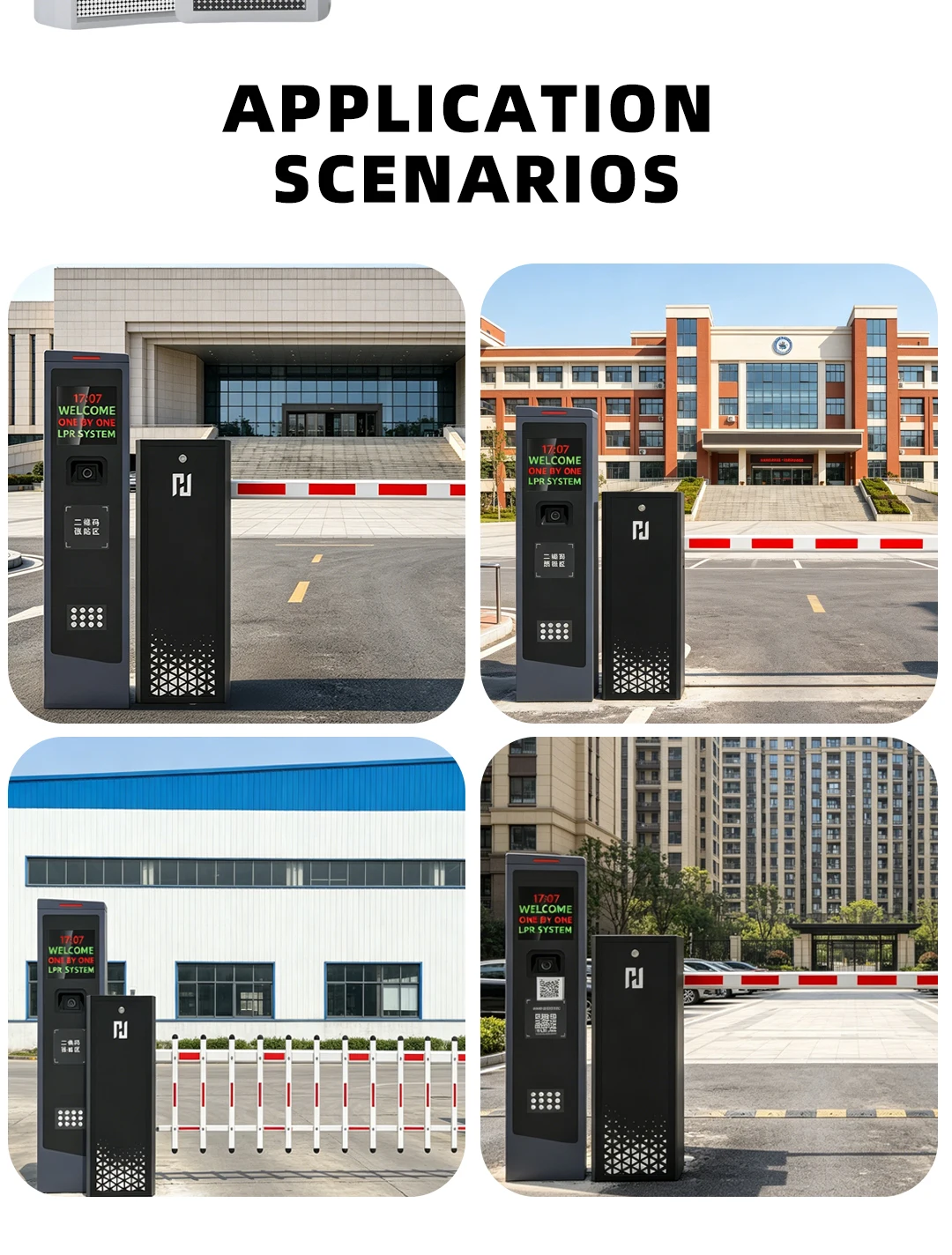
Where these systems are used
- Residential developments: resident permits, visitor entry and private bays.
- Offices and business parks: staff access, visitor registration and vehicle logs.
- Retail and leisure: customer access rules and paid parking workflows.
- Hospitals, schools and public facilities: separating authorised vehicles from general traffic.
- Industrial and logistics sites: staff vehicles, deliveries and fleet movements at busy entrances.
How to specify a system for a real site
Start with a survey, not a product list. Record lane count, peak-hour flow, lane width, vehicle types, expected daily cycles, visitor process, payment requirements and what happens during a network or power failure. Then decide whether the site needs ANPR, RFID, QR access, intercom approval or a combination.
Check compatibility before ordering. Ask for the available interfaces — relay, Wiegand, RS485 or TCP/IP — and confirm how the barrier controller will exchange authorisation signals with the access software. Request wiring diagrams, installation drawings, commissioning steps and the documentation the project requires. Do not assume that a camera, reader or third-party platform will integrate without configuration or additional hardware.
Finally, assess whole-life operation: warranty scope, spare parts, maintenance access, remote diagnostics, software support, training and the fault response process. For outdoor installations, confirm the environmental rating, corrosion protection, drainage and foundation requirements for that specific location.
Safety, privacy and daily operation
A smart access system has to be designed around safe vehicle movement, not only security. Barriers, detectors, warning indicators and access rules should be installed and commissioned by competent personnel in line with the equipment instructions and applicable requirements. Keep lane markings visible, keep pedestrians out of vehicle paths and document how emergency access and manual release work.
Where ANPR is used, plates and event logs may be personal data depending on how the system is operated. Operators should define a lawful purpose, restrict who can view records, set a retention period and display clear privacy information. This article is general guidance, not legal advice.
Maintenance and fault finding
Routine inspection keeps the system dependable. Follow the manufacturer instructions and arrange competent servicing at an interval that reflects traffic volume and operating conditions. Checks typically cover the arm and fixings, cabinet condition, detector response, warning lights, manual release, controller logs and the connected readers or cameras.
| Symptom | What to check first |
|---|---|
| Barrier does not open | Authorisation status, controller power, access signal and fault indicators. |
| ANPR fails to read a plate | Camera view, lighting, plate condition, network connection and recognition settings. |
| RFID access is inconsistent | Tag registration, reader position, interference and permissions. |
| Barrier closes too early | Stop use if unsafe; a competent technician should check detector placement and safety inputs. |
| Records are missing | Network connectivity, software configuration, time settings and log storage. |
Never bypass a safety device to keep a lane running. If behaviour is unpredictable, isolate the equipment according to the site procedure, stop vehicles using that lane and contact a qualified technician. Record the fault, the conditions, any error message and recent changes; that record is usually what shortens the repair.
Frequently asked questions
Is a smart parking access control system the same as an automatic boom barrier?
No. The barrier is the component that physically controls the lane. A smart system also includes identification, access rules, detection, payment, visitor management and reporting software.
Does every site need ANPR?
No. ANPR is appropriate when plate recognition matches the access policy. Other sites are better served by RFID, QR codes, cards, intercom approval or a mixture of methods.
Can it integrate with existing access control?
Often, if the devices and software support compatible interfaces and the integration is configured and commissioned. Confirm interfaces, signal logic, network requirements, licensing and who is responsible for commissioning before ordering.
What matters most for outdoor installations?
Rainfall, wind exposure, temperature range, corrosion risk, drainage, foundations, power, network coverage and maintenance access. Confirm the actual environmental rating of the chosen model.
How much does a system cost?
There is no single price. Cost depends on lane count, barrier model, identification method, payment functions, software, civil works, networking, installation and support. Ask for an itemised quotation based on a survey and a written scope of supply.
Conclusion
A smart parking access control system links identification, permissions, barriers, safety detection and records into one process. The best specification is the one that fits the site’s traffic, users, safety requirements, privacy obligations and maintenance capability — not the one with the longest feature list.
To compare barrier models for a specific lane, see the automatic boom barrier range.
Latest News
Baroxon® | Leading Boom Barrier Manufacturer
Advanced Security Access Control and Intelligent Parking Solutions.
Company Strength
Adequate Inventory
Fast Shipping
Our Products
CONTACT US
Address: No. 2 Wanshou Road, International Innovation Industrial Park, Jinan, Shandong, China







© COPYRIGHT 2025 Baroxon® | Leading Boom Barrier Manufacturer

Contact Us
Our passion is to bring your ideas to life. Work with our design team to create a one-of-a-kind custom finish or cladding system to create a truly unique space. Together we can make your story stand out. If you need something to request a sample, request pricing, or request a demo, please fill out the contact form below. Explain your request in as much detail as you can and a representative will contact you within 1 business day.