
Main Types of Automatic Parking Barriers: A European Specification Guide
Release time:
2026-11-04
Quick answer: The main types of automatic parking barriers are straight-arm boom barriers, folding-arm barriers, high-speed barriers, long-arm or wide-lane configurations, and barriers integrated with access control such as RFID. For a standard European car park entrance with a clear opening of about 3–6 m and unobstructed overhead space, a straight-arm barrier with an opening cycle of roughly 1–6 s is the usual starting point; where headroom is limited to around 2.5 m or less, a jointed folding arm is normally specified instead. The correct choice depends on clear lane width, available headroom, peak-hour vehicle volume, duty rating and the access-control method, and all figures must be confirmed against the exact model datasheet before ordering.
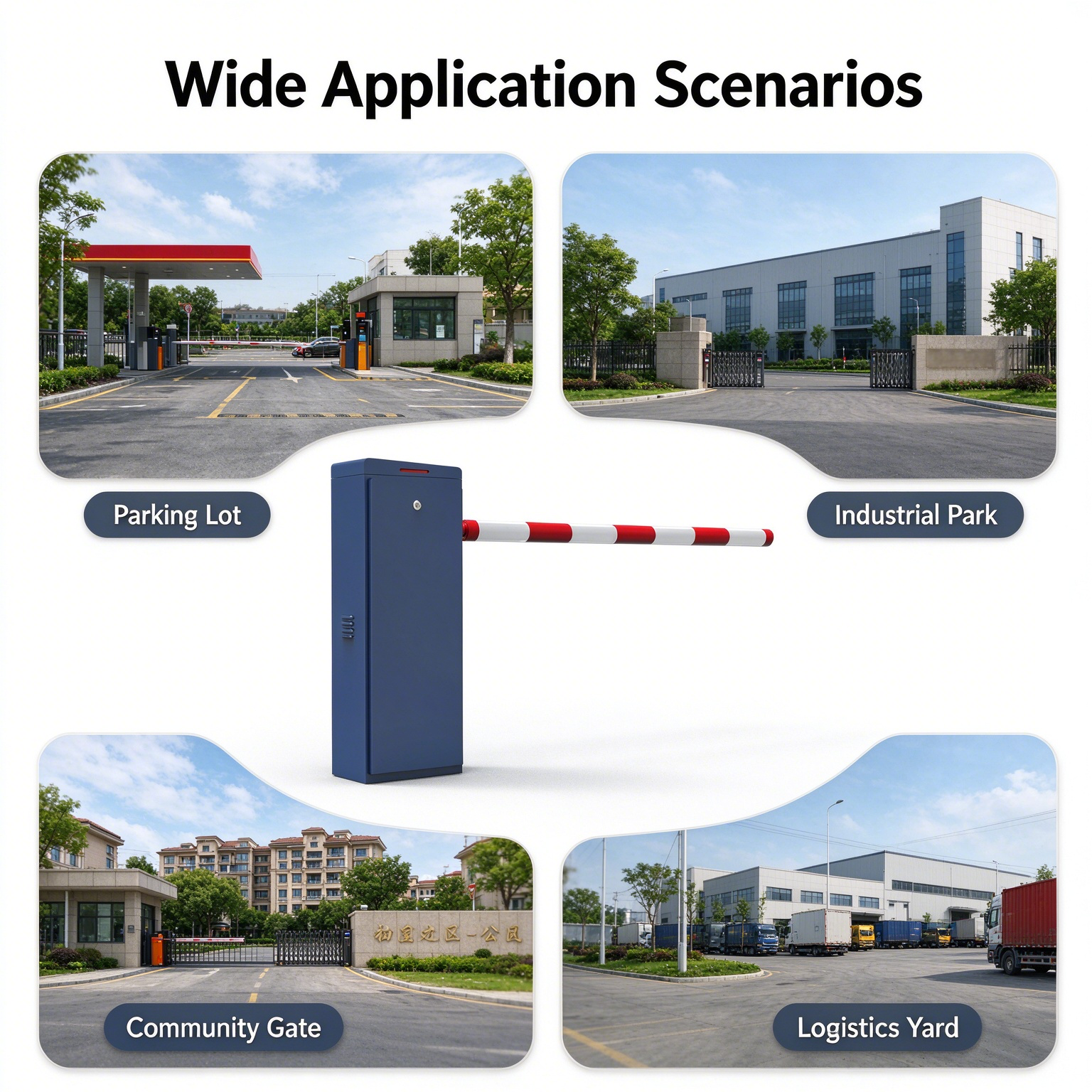
Automatic parking barriers control vehicle access by raising and lowering a powered arm or by another motorised blocking mechanism. They are installed at car parks, residential developments, offices, business parks, hospitals, industrial sites and logistics facilities across Europe. The most suitable type depends on lane width, available headroom, traffic volume, required opening speed, the access-control method and the risks present at the entrance.
The terms automatic parking barrier, boom barrier and boom gate are often used interchangeably in vehicle-access projects. In practice, systems differ in arm design, operating speed, intended duty cycle and integration options. Understanding these differences helps specifiers choose a system that fits the site rather than selecting by appearance or a headline speed figure alone.
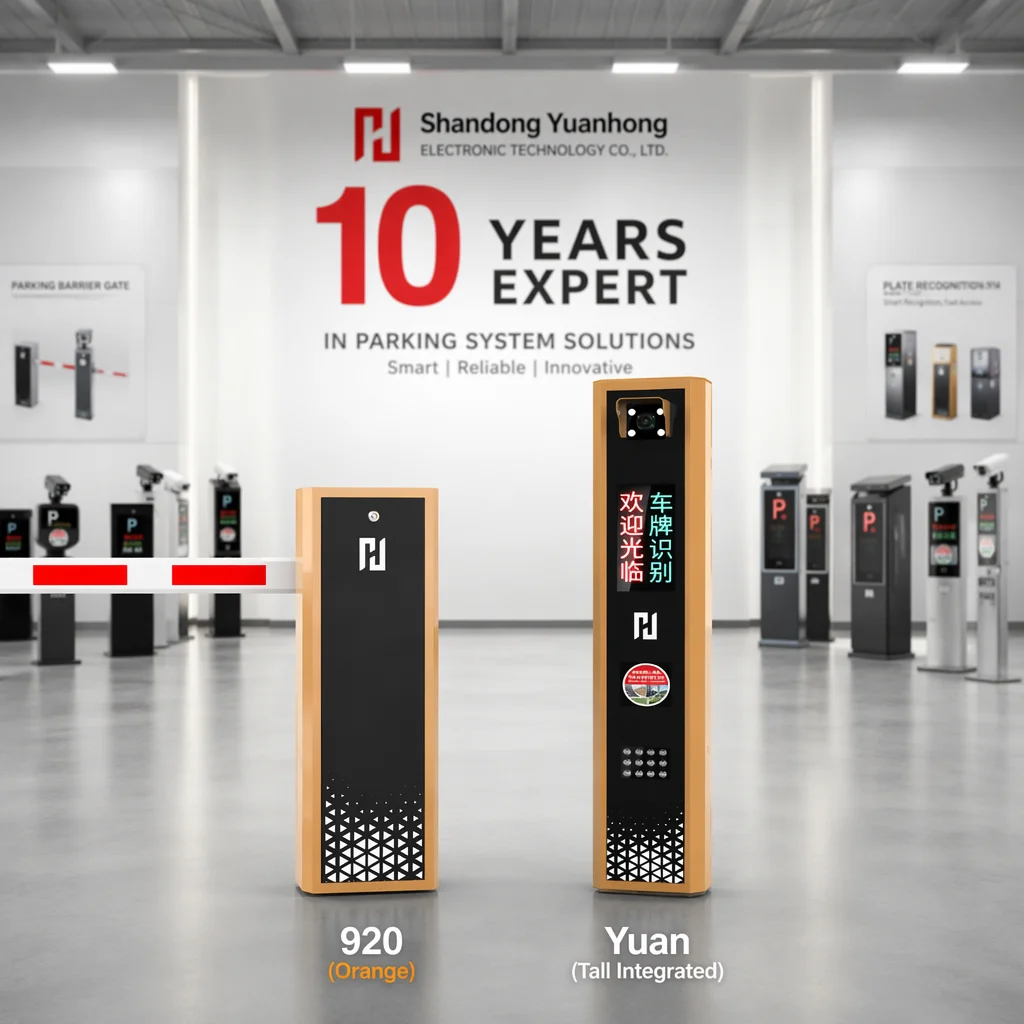
How automatic parking barriers work
A barrier system combines a cabinet with a drive mechanism, a boom arm, a controller and a set of inputs from access-control and safety devices. When a vehicle is authorised, the controller commands the arm to rise; once the vehicle has cleared the lane, the arm returns to the closed position. Detection inputs help manage the closing sequence so the arm does not strike a vehicle or an obstruction.
Because the arm, the controller and the detection devices are separate elements, a “type” of barrier usually describes the arm configuration or the way the system is integrated, not a completely different machine. A straight-arm model may also be high-speed, long-arm or RFID-controlled at the same time.
1. Straight-arm boom barriers
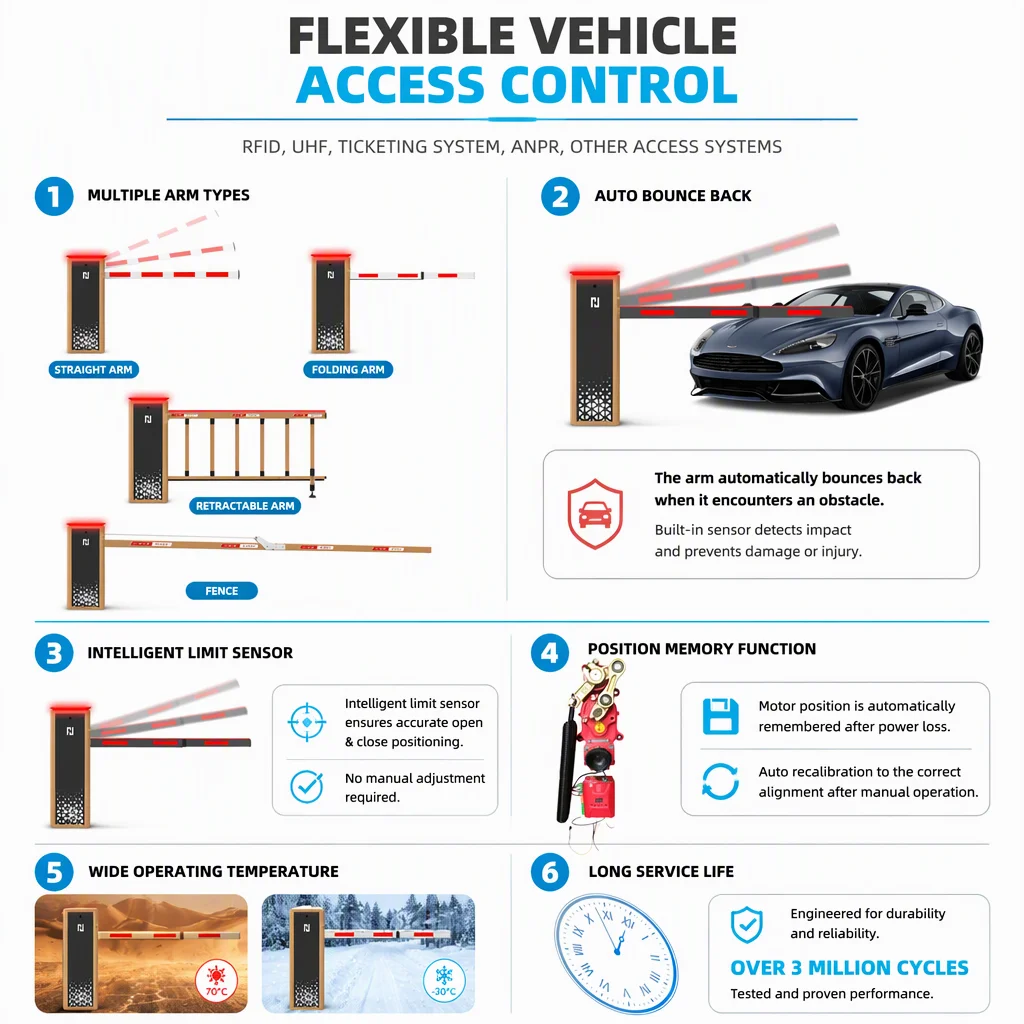
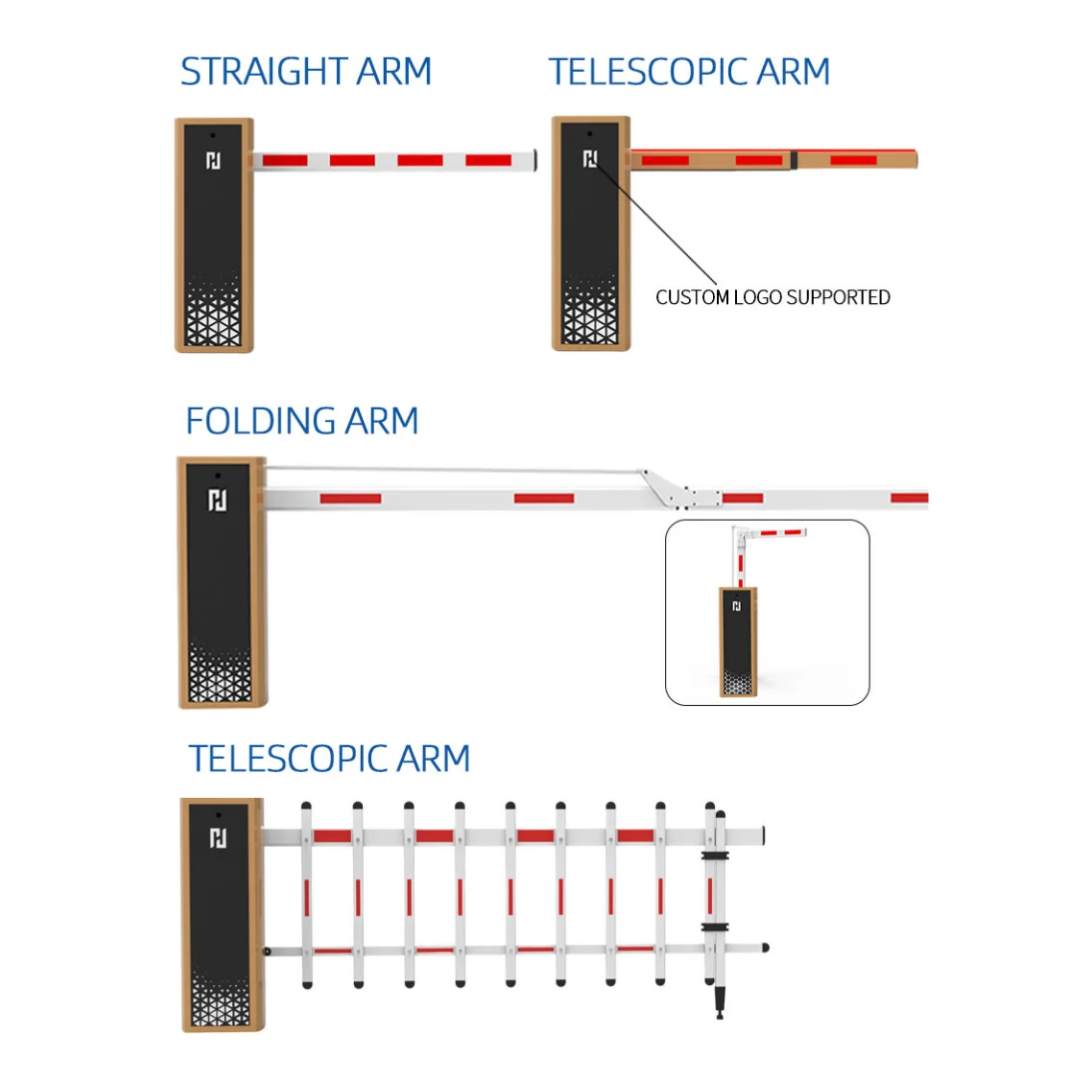
A straight-arm boom barrier uses a single, normally horizontal arm that rises to allow authorised vehicles to pass and lowers to restrict access. It is a common choice for standard car park entrances, apartment developments, office sites and controlled vehicle lanes where there is enough vertical clearance for the arm to move through its full arc.
Straight-arm models suit entrances with straightforward geometry and a clear opening within the manufacturer’s supported arm-length range, commonly 3–6 m. Before specifying a model, measure the clear opening and check kerbs, islands, posts, pedestrian routes, turning space and the cabinet position. A longer arm is not automatically better if it increases deflection, wind loading or the risk of striking nearby objects.
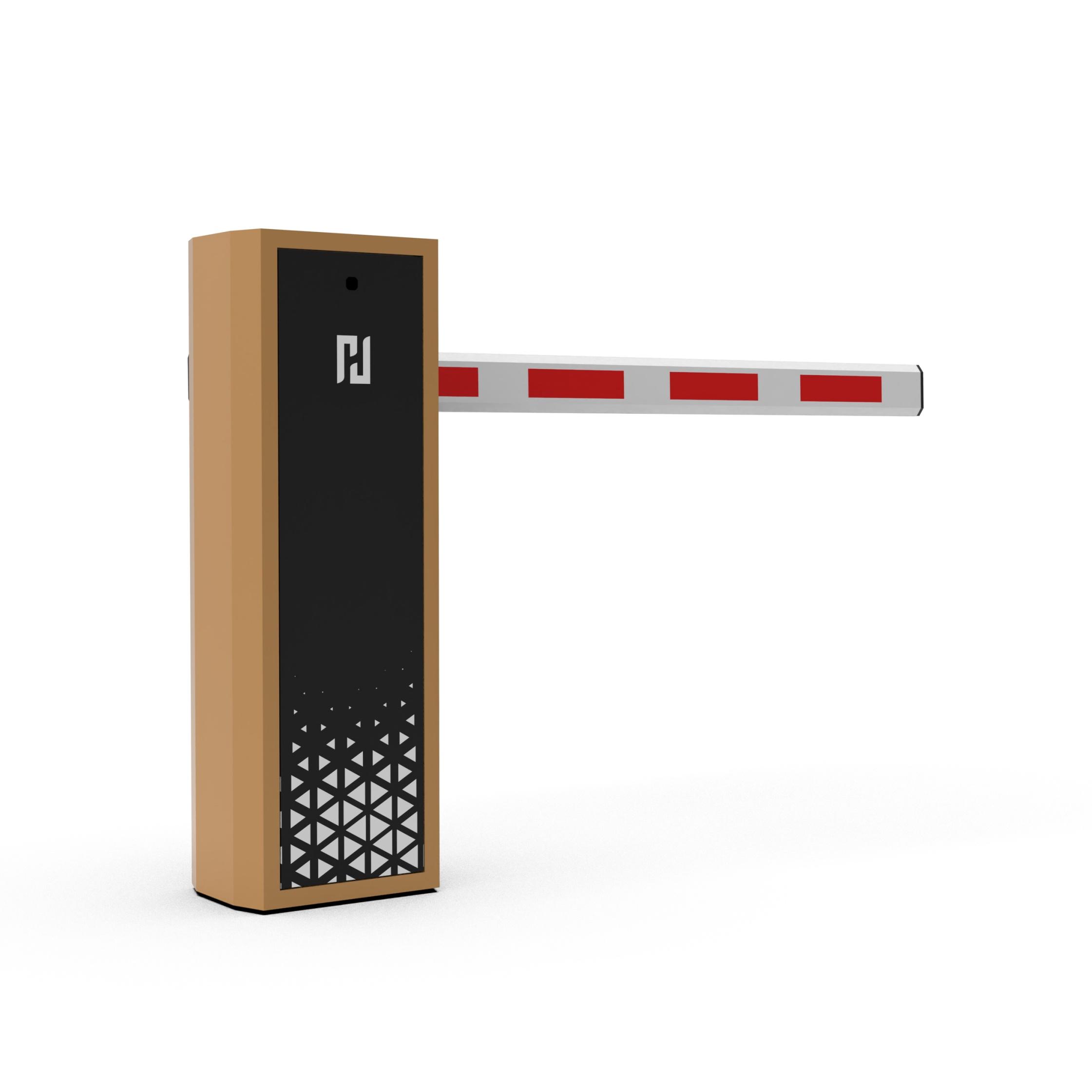
2. Folding-arm barriers for restricted headroom
A folding-arm barrier uses a jointed arm that folds as the barrier opens. This configuration is used in basement car parks, covered entrances and other locations where a conventional straight arm cannot rise fully within the available headroom. It is a practical option for European underground and multi-storey facilities with low soffits.
Select a folding-arm model against the measured ceiling height and the full movement envelope, not the height shown in a photograph. Check the folded-arm clearance, nearby lighting, pipes, signs, sprinkler equipment and vehicle roof heights, and confirm the supported arm length and operating settings with the supplier in writing.
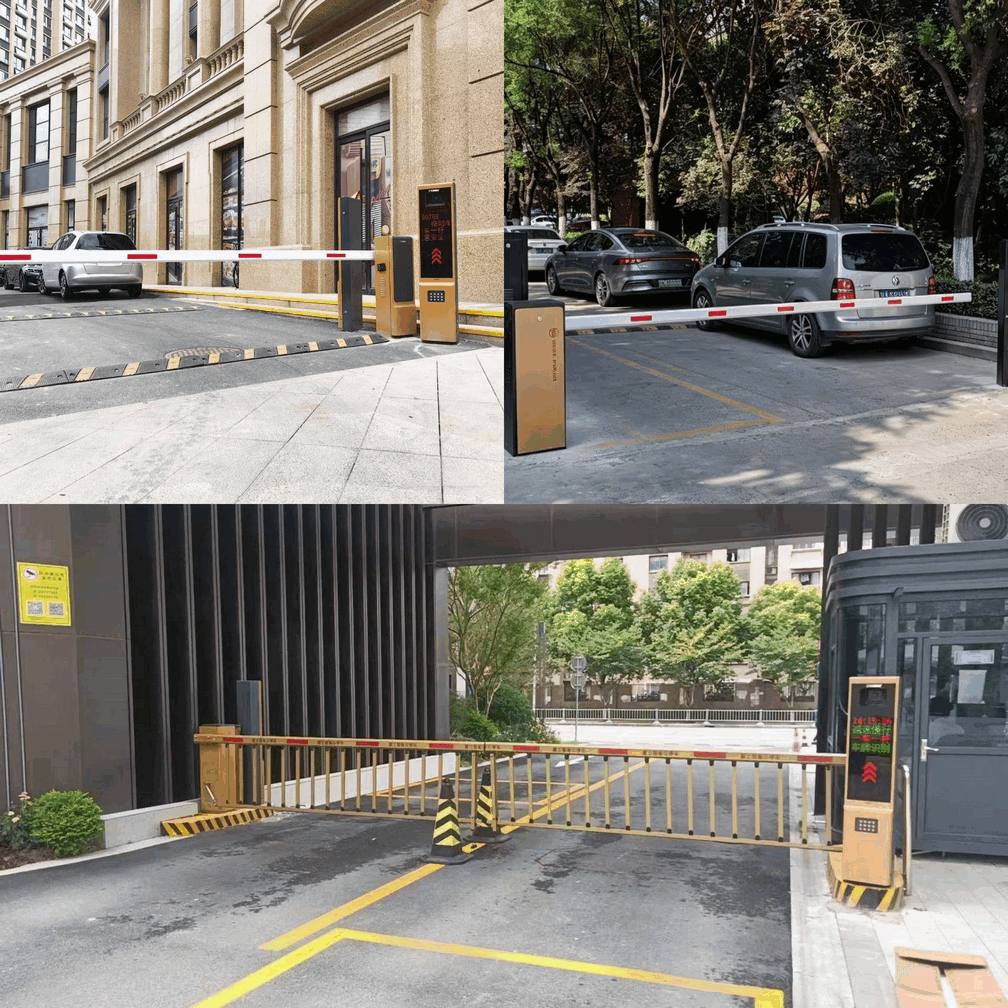
3. High-speed automatic barriers
High-speed barriers are designed for entrances where reducing waiting time and maintaining vehicle flow are priorities, such as busy commercial car parks, logistics facilities and business parks. Depending on the model and arm length, tested opening times may fall in the region of 1–3 s, but the usable cycle time also depends on controller settings, safety devices and the traffic conditions at the site.
Do not choose a barrier on speed alone. A very fast cycle may be unnecessary for a low-volume residential entrance, while a busy site may need credentials to be recognised before the vehicle reaches the arm. Review peak-hour traffic, queue storage, safe stopping distance, duty rating and the consequences of a barrier being temporarily unavailable.
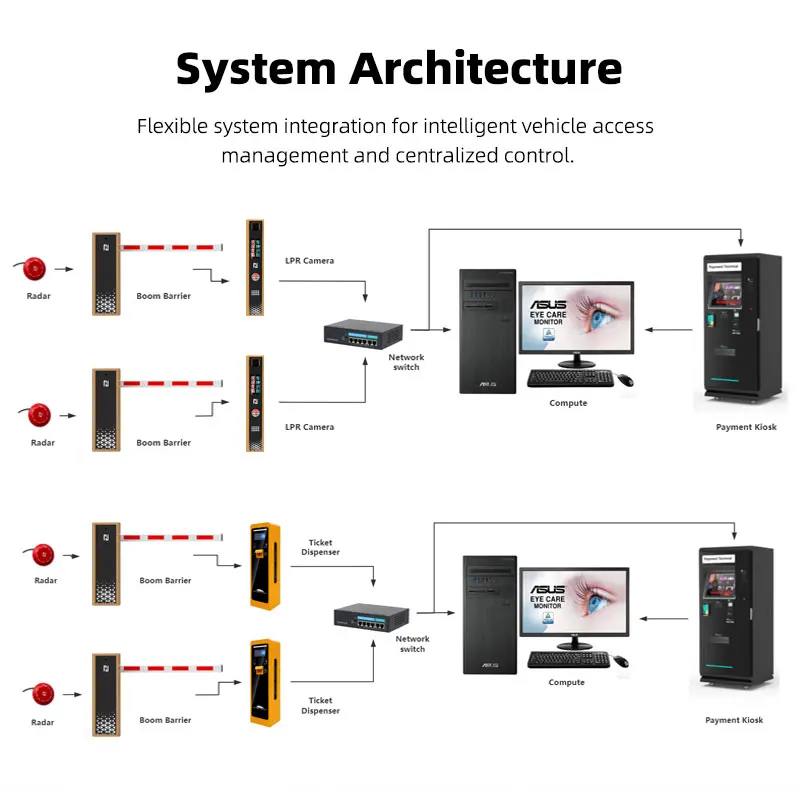
4. Long-arm and wide-lane configurations
Long-arm or wide-lane configurations serve entrances with a larger clear span, subject to the limits of the selected model. They are relevant to industrial premises, logistics yards and multi-lane approaches where a standard short arm would not cover the opening. Some ranges offer telescopic or adjustable arms, but availability and limits must be checked against the exact product specification.
A wide opening needs more than a longer arm. Check arm balance, wind exposure, support arrangements, visibility, foundation requirements and the way vehicles approach or turn through the lane. If the entrance serves heavy goods vehicles, confirm the swept path and turning envelope, and ask the supplier to confirm the maximum supported span in writing.
5. Barriers integrated with RFID access control
An RFID boom barrier is usually not a different physical arm design; the term describes a boom barrier integrated with radio-frequency identification credentials or readers. An authorised vehicle is identified by a tag or card, allowing the controller to issue an opening command. This suits residents, staff, fleet vehicles and other registered users who need repeat access without stopping at a ticket machine.
Before ordering, check the reader type, reading distance, credential management, controller inputs and compatibility with existing access-control software. Reader placement matters: a vehicle should be identified at a suitable point without encouraging tailgating or a queue in a live traffic lane. Where more than RFID is needed, the barrier may also be integrated with ANPR/LPR cameras, intercoms or a parking management platform, subject to model-level compatibility.
Barrier types compared
The table below is a starting point only; confirm model-specific dimensions, speeds, duty ratings and available options with the supplier.
| Barrier type | Best suited to | Main checks |
|---|---|---|
| Straight-arm boom barrier | Standard car parks, offices and residential entrances | Clear lane width, arm length, headroom and traffic volume |
| Folding-arm barrier | Basement or covered entrances with restricted headroom | Ceiling clearance, folded-arm envelope and nearby services |
| High-speed barrier | Busy entrances where queue reduction matters | Tested cycle time, duty rating, safety arrangement and queue layout |
| Long-arm / wide-lane configuration | Wider entrances and selected industrial or logistics sites | Maximum supported span, arm balance, wind exposure and turning path |
| RFID-integrated barrier | Registered residents, staff or fleet access | Reader range, credentials, controller compatibility and integration |
Safety and installation considerations for European sites
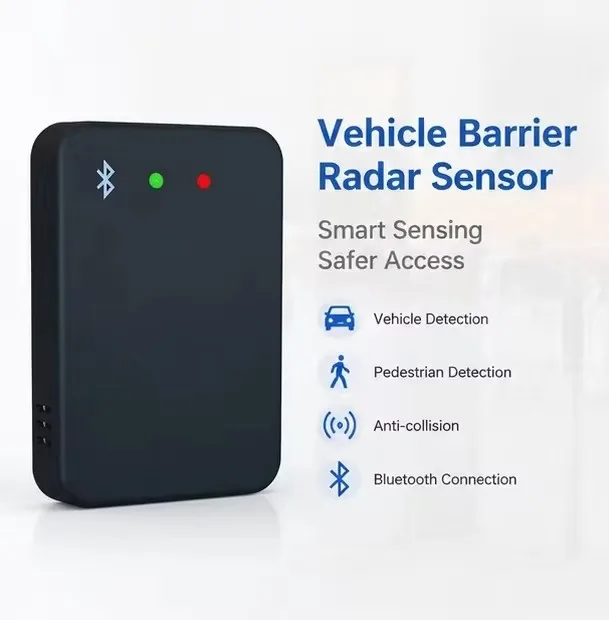
A barrier should be selected and installed as part of a complete vehicle-access arrangement. Depending on the design and site risk assessment, the installation may require radar vehicle detection, induction loops, photocells or other protective devices. These devices serve different functions and should not be treated as interchangeable without a competent assessment.
Environmental and site conditions
Across European sites, consider rain, standing water, temperature changes, road spray, lighting conditions and the mix of vehicles using the entrance. Confirm the product’s specified environmental rating and installation requirements for the exact model. Do not assume a product suits every outdoor environment simply because it is marketed as weather-resistant.
Foundations, cabling and commissioning
- Provide suitable foundations, cable routing, visibility, signage and access for maintenance.
- Allow vehicles to stop and be authorised without blocking a public road or creating unsafe queues.
- Ask the installer to document the detection arrangement, operating logic and emergency release procedure.
- Test normal passage and foreseeable fault scenarios before the barrier is handed over.
- Confirm product-specific arm lengths, speeds, duty ratings and environmental ratings in writing.
How to specify the right configuration
Start with the site, not the product catalogue. A straight-arm boom barrier is the most common choice for standard European vehicle entrances where overhead clearance is sufficient and the clear opening is within the model’s supported arm-length range; it remains the default against which folding, high-speed, long-arm and RFID-integrated variants are compared.
For a quotation, provide the clear lane width, available headroom, traffic volume, vehicle types, operating hours, preferred access method, safety requirements, installation environment and any existing control system. Site photographs or a layout drawing help the supplier recommend a suitable configuration, and a written model datasheet should confirm the final arm length, opening time, duty rating and integration options before an order is placed.
Frequently asked questions
What is the most common type of automatic parking barrier?
A straight-arm boom barrier is the common option for standard vehicle entrances where there is enough overhead clearance and the required lane width is within the model’s supported range. The right choice still depends on the site layout, traffic volume, safety design and access-control requirements.
When should I choose a folding-arm barrier?
Consider a folding-arm barrier when the entrance is covered or in a basement and a conventional straight arm cannot rise within the available headroom. Measure the full movement area and confirm the supported configuration with the supplier before ordering.
Are high-speed barriers always better for busy car parks?
No. Opening speed is only one part of performance. The barrier must also match the arm length, duty rating, detection arrangement, access-control process and safe queue layout. A faster barrier will not solve a queue caused by slow credential recognition or insufficient space.
Is an RFID boom barrier a separate barrier type?
Usually, RFID describes the access-control method rather than the physical arm shape. An RFID reader can be integrated with a compatible automatic boom barrier, provided the reader, controller and access software work together as specified.
Conclusion
The main types of automatic parking barriers are straight-arm boom barriers, folding-arm barriers, high-speed models, long-arm or wide-lane configurations, and barriers integrated with access technologies such as RFID. These categories overlap: a straight-arm barrier may also be high-speed or RFID-controlled. The best specification is the one that fits the entrance geometry, traffic demand, safety requirements and the wider access-control system.
Treat every published figure as a starting point. Confirm arm length, opening time, duty rating, environmental rating and controller compatibility against the exact model datasheet, and have the complete installation commissioned and documented before it is handed over to the operator.
Review the automatic boom barrier gate range for model options and project specifications, and confirm the exact configuration with the supplier before ordering.
Latest News
Baroxon® | Leading Boom Barrier Manufacturer
Advanced Security Access Control and Intelligent Parking Solutions.
Company Strength
Adequate Inventory
Fast Shipping
Our Products
CONTACT US
Address: No. 2 Wanshou Road, International Innovation Industrial Park, Jinan, Shandong, China







© COPYRIGHT 2025 Baroxon® | Leading Boom Barrier Manufacturer

Contact Us
Our passion is to bring your ideas to life. Work with our design team to create a one-of-a-kind custom finish or cladding system to create a truly unique space. Together we can make your story stand out. If you need something to request a sample, request pricing, or request a demo, please fill out the contact form below. Explain your request in as much detail as you can and a representative will contact you within 1 business day.