
How Does a Boom Barrier Work? A Step-by-Step Guide
Release time:
2026-11-04
Quick answer: A boom barrier works through a seven-step sequence: a vehicle arrives, an access request is authorised, the controller validates it, a motorised drive raises the arm, the vehicle passes, configured safety inputs are checked, and the arm lowers only when the lane is clear and the safety logic permits closing. The decisive condition is the controller: it will not start opening without a valid request, and it will not permit closing until vehicle-detection and protective inputs report that the way is clear. There is no universal opening time — the cycle depends on the model, arm length, drive type, controller settings and safety configuration, so the figure must be confirmed for the exact installation rather than assumed from a headline number.
A boom barrier is an automated vehicle-access system that controls entry and exit by raising and lowering a long barrier arm across a lane. Across Europe, boom barriers are commonly used at car parks, residential developments, office campuses, business parks, industrial premises, logistics yards and other sites where vehicle movements need to be managed. The basic principle is straightforward: a valid access request is received, the controller checks the signal and operating conditions, the motor raises the arm, and the barrier closes again when the vehicle has passed and the safety sequence allows it.
A boom barrier is more than a motor and an arm. A complete installation may include a barrier cabinet, drive mechanism, control board, access reader or remote control, vehicle detectors, safety sensors and connections to a wider parking or building-access system. The exact components depend on the model and the site design.

The main components of an automatic boom barrier
Before following the operating sequence, it helps to understand the main parts of a typical automatic boom barrier.
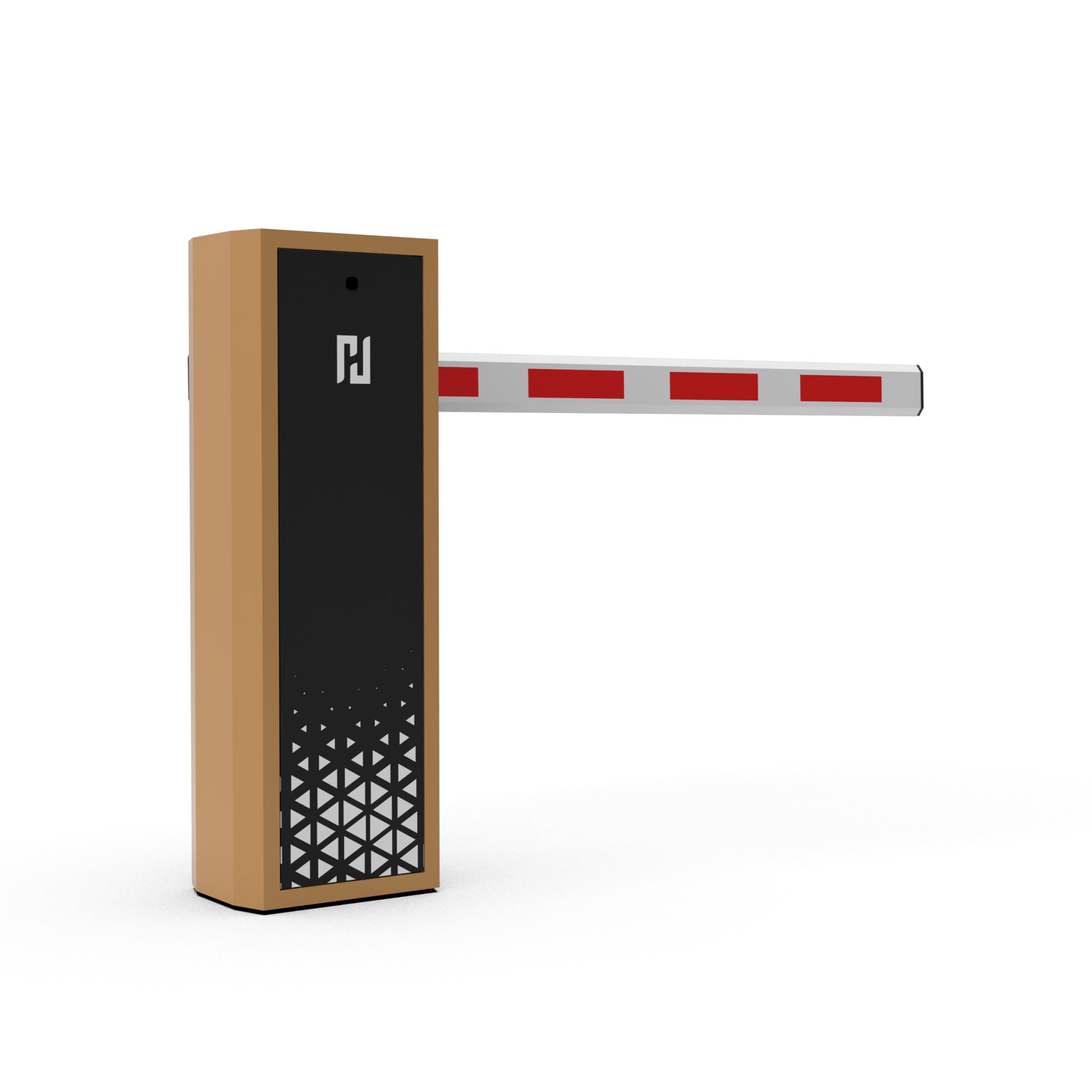
- Barrier arm: the horizontal or configured arm that blocks or releases the vehicle lane. Depending on the site, options may include straight, folding, telescopic or fence-style arrangements where the selected model supports them.
- Barrier cabinet and drive: the housing contains the motor and mechanical drive that move the arm. Configurations may use brushless DC or heavy-duty AC drives, with operating characteristics that depend on the model and configuration.
- Control board: the controller receives commands, checks relevant inputs and coordinates the opening and closing sequence, including supported limits, detector inputs and safety responses.
- Access authorisation device: this may be a remote control, RFID reader, keypad, intercom release, ticketing system or an ANPR/LPR camera connected to a compatible controller.
- Vehicle detection and safety devices: depending on the design, radar, inductive loops, photocells or other approved protective devices may detect vehicles or obstructions and influence when the arm can move.
How does a boom barrier work? Step by step
Step 1: A vehicle approaches the entrance
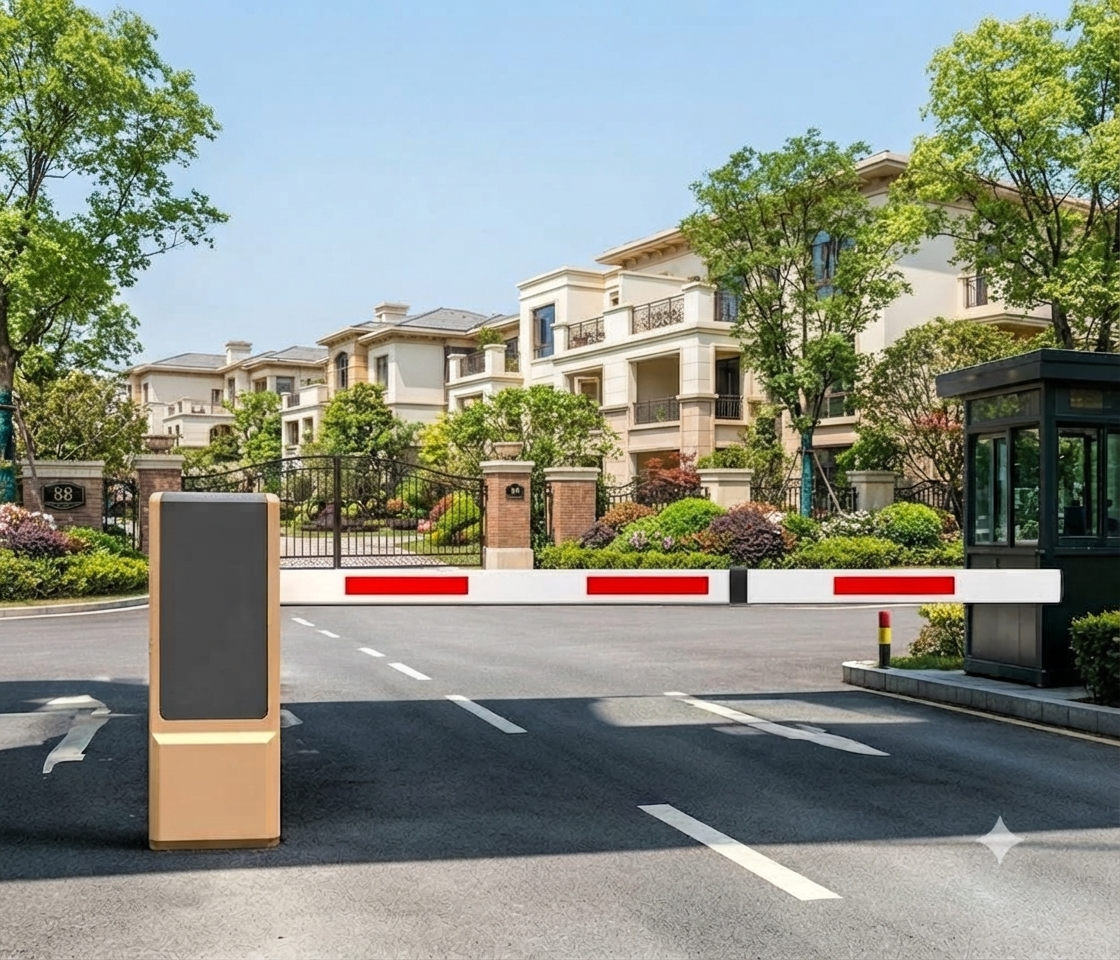
A vehicle arrives at the controlled lane and stops at the position indicated by the site layout, road markings or signs. The barrier should be positioned so that drivers have enough space to approach, wait and pass without obstructing a public road or a pedestrian route. Site design also needs to consider queue length, visibility and the turning path of larger vehicles.
At this point the barrier arm is normally down to restrict unauthorised entry, unless the site is configured for a different operating mode. The system waits for a valid request from an access device or an authorised operator.
Step 2: The driver requests access
The driver presents an approved credential or uses the site’s configured access method. For example, an RFID reader may check a registered tag or card, a remote control may send an opening command, an intercom may allow an operator to release the barrier, or an ANPR/LPR system may compare a recognised number plate with an authorised list.
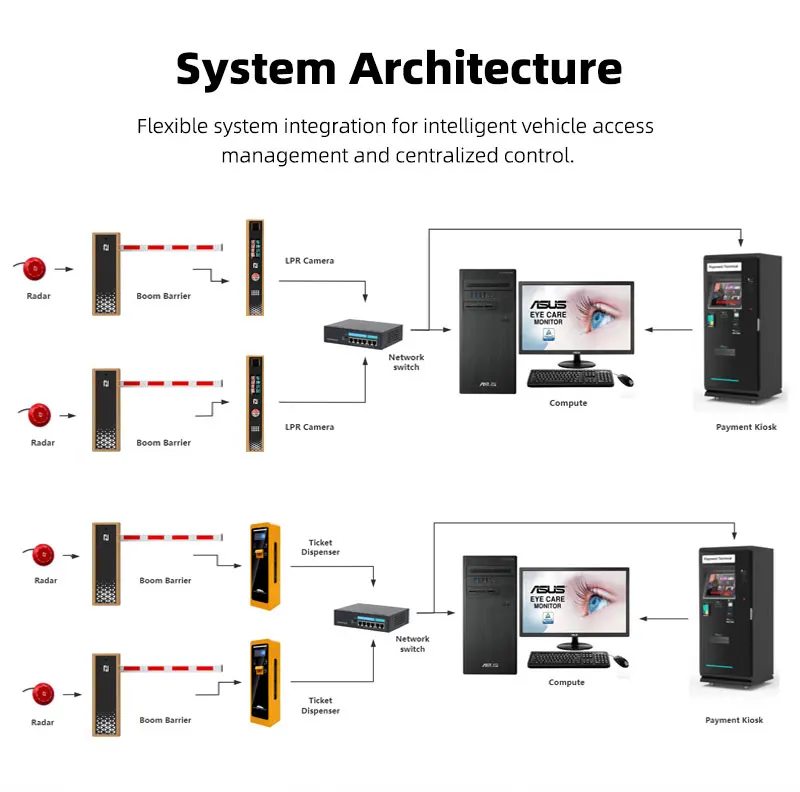
A typical European product range includes automatic boom barriers, RFID options, ANPR/LPR car-plate systems and radar sensors. These can form part of an integrated vehicle-access solution, but compatibility between the barrier controller, reader, camera, software and safety devices should be confirmed for the exact project.
Step 3: The controller checks the request
The access device sends its result or command to the barrier controller. If the request is valid and the system’s operating conditions are satisfied, the controller initiates the opening sequence. If access is not authorised, the barrier should remain closed and the system may provide an indication or require another action, depending on the installation.
The controller also coordinates the barrier with relevant inputs, such as limit switches, vehicle detectors and safety devices supported by the model. This is why choosing compatible components and commissioning them correctly matters: a barrier should not be treated as an isolated motorised arm.
Step 4: The motor raises the barrier arm
Once the opening command is accepted, the drive mechanism moves the arm from its closed position towards the open position. The motor, gearbox or drive assembly, counterbalance and controller settings work together to manage the movement. Some configurations provide adjustable speed or soft start and stop, but the available functions and actual cycle time depend on the specific model, arm length and settings.
Do not assume every boom barrier opens at the same speed. A longer arm, a different motor type, the required duty cycle and the safety configuration can all affect performance. For a busy entrance, ask the supplier to confirm the opening and closing time for the exact proposed configuration rather than relying on a headline figure for another model.
Step 5: The vehicle passes through the lane
When the arm reaches its open position, the vehicle can pass through the controlled lane. A vehicle detector or other configured input may help the system recognise that a vehicle is present or still passing through. The detector’s exact role depends on how the access and safety system has been designed and commissioned.
Drivers should follow the site’s signs and proceed only when there is sufficient clearance. The operator should not rely on the arm being open as the only indication that the route is safe; the lane layout, pedestrian separation, traffic signs and any interlocking with other equipment also matter.
Step 6: Safety devices monitor the closing sequence
Before and during closing, the control system uses the configured detector and safety inputs to manage the movement. Depending on the installation, radar, inductive loops, photocells or other protective devices may help detect a vehicle or obstruction and cause the barrier to hold, stop or reverse in accordance with the system design.
No single sensor should be assumed to cover every risk. A radar field, a loop and a photocell detect in different ways and cover different areas. The installer should carry out a site-specific risk assessment, position and configure devices correctly, and test representative vehicle movements during commissioning. Operators should keep the equipment maintained and follow the manufacturer’s instructions.
Step 7: The arm returns to the closed position
Once the vehicle has passed and the configured conditions allow closing, the controller commands the drive to lower the arm. The barrier then returns to its normal closed position and waits for the next authorised request. Depending on the access system, the transaction may also be logged by parking-management or access-control software.
If the barrier does not open or close as expected, staff should follow the site’s operating procedure rather than forcing the arm. Power interruptions, a detector fault, an obstruction, a controller setting or a mechanical issue may affect operation. The maintenance team should identify the cause and use the approved manual-release procedure only where instructed and safe to do so.
A simple boom barrier operating sequence
| Step | What happens | Key condition |
|---|---|---|
| 1 | Vehicle approaches | The arm is normally down; the system waits for a valid request. |
| 2 | Access is requested | A remote, RFID credential, intercom or ANPR/LPR system sends a request. |
| 3 | Controller validates the request | Supported inputs and operating conditions are checked. |
| 4 | Arm opens | The drive mechanism raises the barrier. |
| 5 | Vehicle passes | Detection inputs may monitor vehicle presence. |
| 6 | Safety logic permits closing | The controller uses the configured sensor signals. |
| 7 | Arm closes and resets | The system returns to standby for the next request. |
How do RFID and ANPR work with a boom barrier?
RFID access control
An RFID system uses a reader to identify a compatible tag or card. When the credential is recognised and authorised, the access-control system sends a release request to the barrier controller. RFID is often considered for residents, staff, subscribers or other regular users because credentials can be issued and managed by the site administrator.
The project team should confirm the reader’s range, credential format, wiring or communications interface and compatibility with the selected controller. Long-range RFID may suit some vehicle approaches, but the effective reading distance and installation arrangement must be checked on site.
ANPR/LPR number-plate recognition
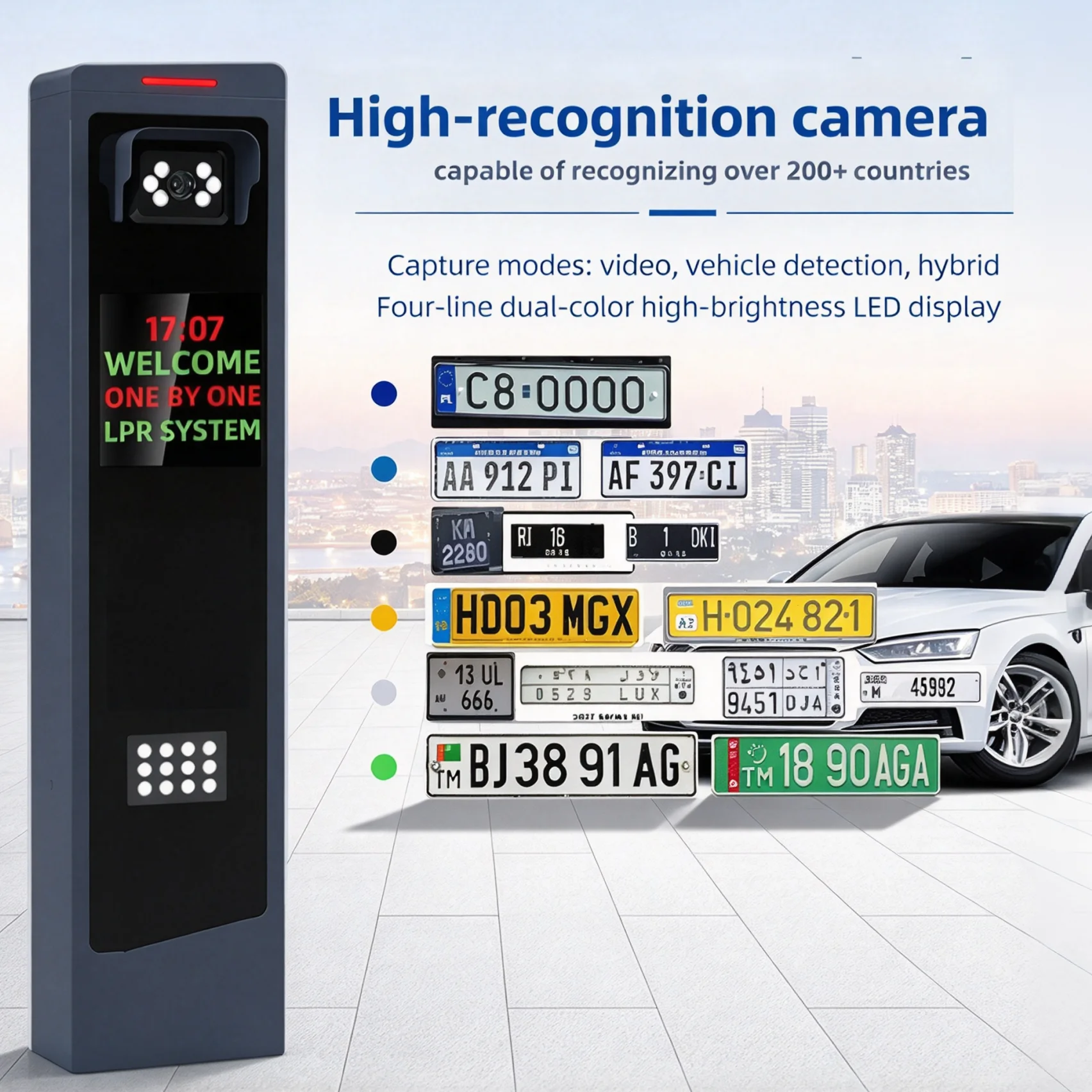
ANPR (Automatic Number Plate Recognition), also called LPR (Licence Plate Recognition), uses a camera and recognition software to read a vehicle registration mark. The system checks the result against the configured access rules and, when authorised, sends an opening request to a compatible barrier controller. ANPR can reduce the need for drivers to present a card or use a remote, although the full arrangement depends on camera positioning, lighting, software, network connectivity and the site’s access policy.
For a European installation, confirm that the proposed camera and software are suitable for the actual approach angle, vehicle speed, lighting conditions and the registration-plate formats in use. The supplier should explain how access lists are managed, how failed reads are handled and what alternative process is available when the recognition system is unavailable.
What affects the performance of a boom barrier?
The performance of a boom barrier depends on more than the motor’s advertised speed. The following factors should be considered when specifying a system for a European site.
| Factor | What to check |
|---|---|
| Arm length and type | The arm must suit the clear lane width and the model’s approved configuration; longer arms change balance and operating time. |
| Traffic volume and duty cycle | A busy entrance may need a drive rated for frequent or continuous operation; confirm the duty rating for the exact model. |
| Access-control response | Readers, cameras, software and networks must provide the authorisation signal at the right time. |
| Safety-device layout | Sensor position, detection coverage and controller logic affect when the barrier can safely move. |
| Weather and exposure | Confirm the specified ingress-protection rating and environmental limits for the exact product. |
| Installation and maintenance | Foundation quality, cabinet alignment, wiring, commissioning and routine inspection all contribute to reliability. |
Where are boom barriers commonly used across Europe?
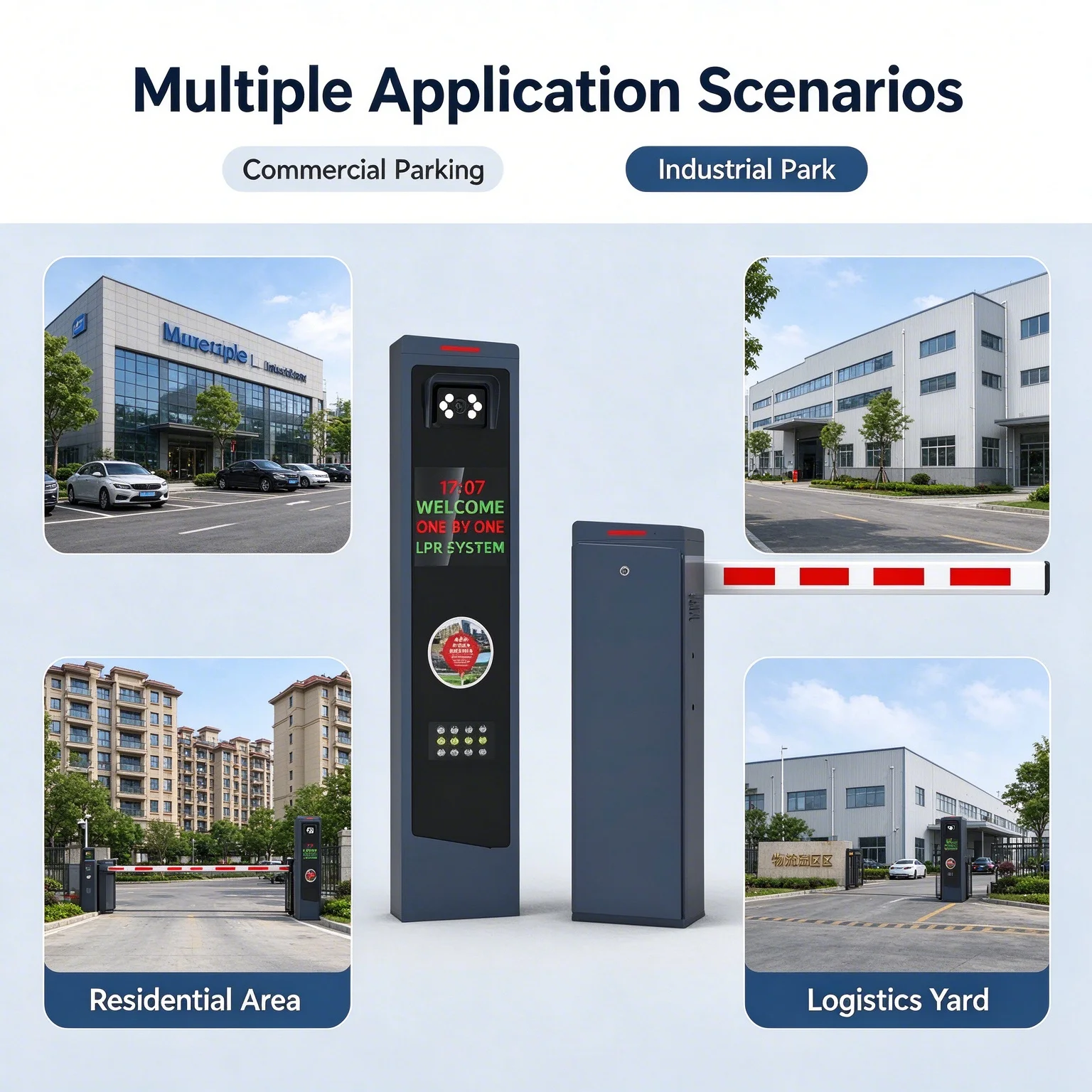
Automatic boom barriers are used wherever a site needs to regulate vehicle entry or exit. Typical applications include:
- Residential developments and gated communities: manage resident, visitor and contractor access, often alongside RFID or intercom systems.
- Office buildings and business parks: support staff access, visitor management and controlled parking.
- Retail and public car parks: coordinate entry and exit with ticketing, payment or ANPR/LPR systems where specified.
- Industrial premises and logistics yards: control vehicle movements at site entrances and help separate public traffic from operational areas.
- Hospitals, schools and campuses: manage designated vehicle entrances while considering emergency access, pedestrian movement and peak-period queues.
The barrier should be selected for the site’s actual operating requirements, not just its application label. A residential entrance with occasional visitor traffic may need a different control sequence and duty rating from a high-volume commercial car park.
Safety and compliance: what should operators check?
A boom barrier is powered moving equipment, so safety depends on the complete installation, its intended use, the risk assessment, the protective devices and the way it is maintained. Ask the supplier for the applicable product documentation and installation instructions, and confirm which conformity markings and documents apply to the exact model being supplied. Do not assume that one marking alone demonstrates that every site-specific installation is safe or compliant.
Before handover, the installer should verify the mounting and foundation, electrical connections, opening and closing limits, access-control inputs, safety-device operation, emergency or manual-release arrangements where fitted, and the operating instructions provided to site staff. Testing should reflect the actual lane layout and foreseeable vehicle movements.
For European projects, the client, designer, installer and supplier should clarify their respective responsibilities and verify the current legal and technical requirements applicable to the equipment and installation, including relevant European and national standards and conformity documentation. Where a project specifies a particular marking, standard or document, confirm the exact requirement in writing rather than relying on a general sales statement. Do not rely on a generic claim that a device is “anti-smash” or “safe” without confirming the complete installed system.
How to choose a suitable boom barrier system
Use this practical checklist when specifying a system for a European site.
- Measure the clear lane width and confirm the required arm length.
- Record peak-hour traffic, expected operating frequency and any queueing constraints.
- Decide how users will be authorised: remote control, RFID, intercom, ANPR/LPR or another compatible method.
- Identify the required safety devices and ask how they interact with the controller.
- Check power supply, environmental exposure, mounting surface and available installation space.
- Request the wiring diagram, foundation drawing, operating instructions, conformity documents and maintenance recommendations relevant to the quoted model.
- Confirm warranty coverage, spare-parts availability, remote technical support and commissioning responsibilities.
- Arrange for the completed installation and safety functions to be tested before the system is put into normal service.
Frequently asked questions
Does a boom barrier work automatically?
Yes. An automatic boom barrier uses a motorised drive and controller to raise and lower the arm after receiving a valid command and checking the configured operating conditions. The command may come from a remote, RFID reader, intercom, ANPR/LPR system or another compatible access-control device.
Can a boom barrier work with ANPR or RFID?
It can, provided that the barrier controller, reader or camera, software and communication interfaces are compatible. The access-control design should be confirmed for the selected model and tested as a complete system during commissioning.
What happens if a vehicle is under the barrier arm?
The response depends on the safety devices, controller logic and configuration installed at the site. Vehicle detection and protective devices may be arranged to hold the arm open, stop it or reverse it when a relevant obstruction is detected. The actual behaviour must be verified through the manufacturer’s instructions, risk assessment and commissioning tests; operators should never assume that every barrier has identical protection.
How long does a boom barrier take to open?
There is no single opening time for every boom barrier. The time depends on the model, arm length, drive type, controller settings and safety configuration. Ask the supplier for the opening and closing times of the exact configuration being quoted rather than relying on a generic figure.
Conclusion
A boom barrier works by combining access authorisation, controller logic, a motor-driven arm and a configured safety system. A typical sequence is simple — request access, validate the request, raise the arm, allow the vehicle to pass, check the closing conditions and lower the arm — but the reliability and safety of the result depend on correct specification, compatible integration, installation and commissioning.
For a European project, begin with the entrance dimensions, traffic pattern, access-control method and site risks. Then confirm the arm configuration, operating duty, safety devices, interfaces, documentation and after-sales arrangements with the supplier. The final specification should always be confirmed for the actual site and the exact model.
Explore the automatic boom barrier gate range for model options, arm configurations and project specifications.
Latest News
Baroxon® | Leading Boom Barrier Manufacturer
Advanced Security Access Control and Intelligent Parking Solutions.
Company Strength
Adequate Inventory
Fast Shipping
Our Products
CONTACT US
Address: No. 2 Wanshou Road, International Innovation Industrial Park, Jinan, Shandong, China







© COPYRIGHT 2025 Baroxon® | Leading Boom Barrier Manufacturer

Contact Us
Our passion is to bring your ideas to life. Work with our design team to create a one-of-a-kind custom finish or cladding system to create a truly unique space. Together we can make your story stand out. If you need something to request a sample, request pricing, or request a demo, please fill out the contact form below. Explain your request in as much detail as you can and a representative will contact you within 1 business day.